Articles

  • High Protein Foods for Muscle Gain: Protein per Serving & Practical Choices

    High Protein Foods for Muscle Gain: Protein per Serving & Practical Choices

    The best high protein foods for muscle gain are foods that make it practical to reach your daily protein target while fitting your calorie needs, preferences and overall diet. Useful options include chicken breast, Greek yogurt, cottage cheese, eggs, fish, lean beef, tuna, milk, tofu, tempeh, lentils and edamame.

    But no individual food builds muscle by itself. Muscle growth depends primarily on progressive resistance training, sufficient total protein, adequate energy availability and consistency over time. Resistance training provides the stimulus; protein provides amino acids needed to support muscle remodeling and growth.[2–4]

    For many adults who regularly perform resistance training, a daily protein intake around 1.6 g/kg of body weight is a useful evidence-based reference point. Individual needs can vary, and eating progressively more protein does not guarantee progressively more muscle.[2,3]

    Key Takeaways

    • Resistance training is the main stimulus for muscle growth. High-protein foods support that process; they do not replace it.
    • For many resistance-training adults, approximately 1.6 g/kg/day of protein is a useful practical target, although individual needs vary.[2,3]
    • The most useful comparison is often protein per realistic serving, not protein per 100 grams.
    • Protein density — how much protein a food provides relative to its calories — can matter when you want to build muscle without unnecessarily increasing calorie intake.
    • Total daily protein generally matters more than finding a perfect protein timing strategy.[5,6]
    • Animal proteins often provide a dense package of essential amino acids, but plant proteins can absolutely support muscle gain when total intake and overall diet quality are adequate.[7–9]
    • A large calorie surplus is not automatically better for hypertrophy. Faster weight gain can also mean more fat gain.[10–12]
    • Protein powder can be convenient, but it is not required if you can meet your needs with food.
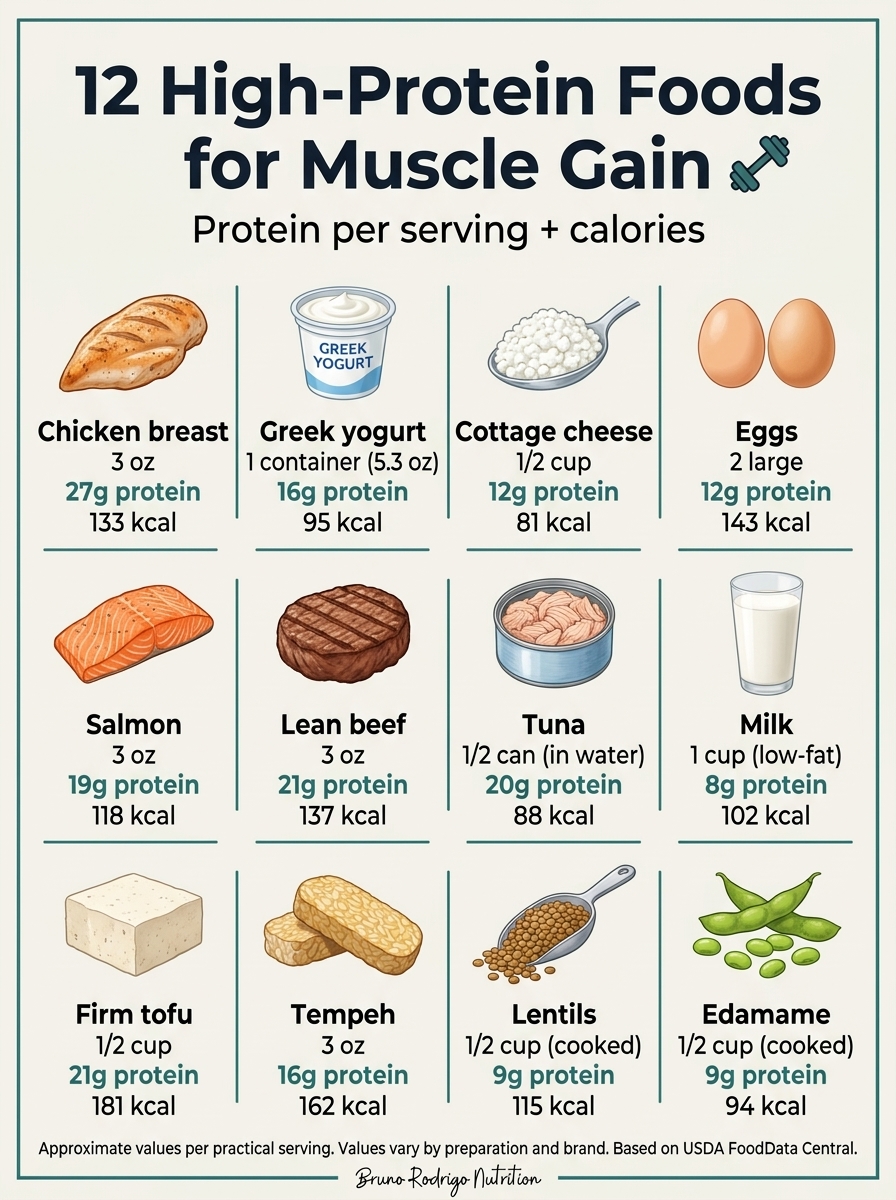
    Infographic showing high-protein foods for muscle gain with practical serving sizes, protein grams and calories.

    What Are the Best High-Protein Foods for Muscle Gain?

    There is no single best food for building muscle.

    A useful high-protein food should make it easier to meet your total protein needs while fitting the rest of your diet. Depending on the person, that may mean prioritizing protein density, convenience, cost, plant-based eating, micronutrients, appetite or simply foods they enjoy enough to eat consistently.

    Practical choices include:

    • chicken breast and other lean poultry;
    • lean beef;
    • tuna and other fish;
    • salmon and other oily fish;
    • Greek yogurt;
    • cottage cheese;
    • milk;
    • eggs;
    • firm tofu;
    • tempeh;
    • edamame;
    • lentils and other legumes.

    These foods are not nutritionally interchangeable.

    For example, chicken breast and tuna provide a large amount of protein for relatively few calories. Salmon provides less protein per calorie, but also supplies substantial fat, including long-chain omega-3 fatty acids. Lentils provide less concentrated protein but also contribute carbohydrates, fiber and micronutrients.

    That is why ranking foods only by “grams of protein” can be misleading.

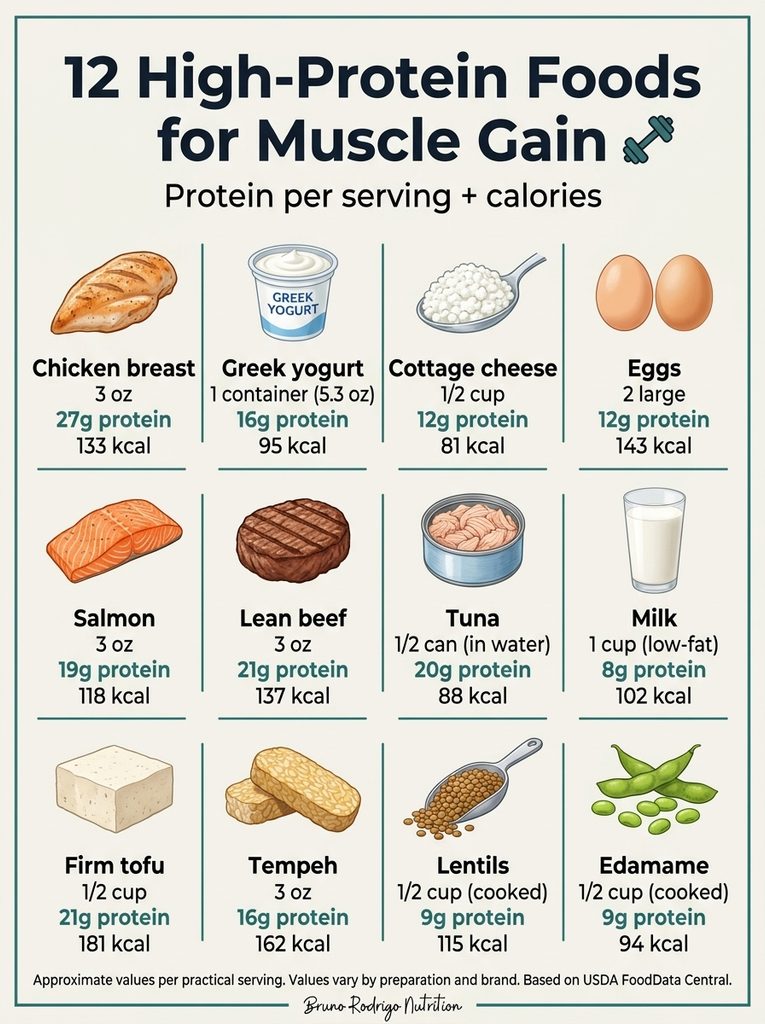
    High-Protein Foods: Protein per Serving and Calories

    The table below uses practical portions rather than forcing every food into a 100-gram comparison.

    Nutrient values are approximate and rounded from USDA FoodData Central entries. Exact values vary by variety, brand, cooking method and preparation.[1]

    FoodPractical servingProteinCaloriesProtein per 100 kcalApprox. calories to get 25 g protein
    Chicken breast, cooked, skinless3 oz / 85 g27 g133 kcal20.5 g122 kcal
    Tuna, light, canned in water, drained1 small can / ~107 g20 g96 kcal21.1 g118 kcal
    Lean beef, top round, cooked3 oz / 85 g31 g160 kcal19.4 g129 kcal
    Greek yogurt, plain, nonfat1 container / 156 g16 g95 kcal16.9 g148 kcal
    Cottage cheese, low-fat 2%1/2 cup / ~113 g16 g102 kcal15.2 g165 kcal
    Firm tofu, calcium-set1/2 cup / 126 g22 g181 kcal12.0 g208 kcal
    Salmon, Atlantic, cooked3 oz / 85 g19 g180 kcal10.6 g237 kcal
    Tempeh, cooked100 g20 g195 kcal10.2 g245 kcal
    Edamame, cooked1 cup / 155 g19 g188 kcal9.8 g254 kcal
    Eggs2 large13 g155 kcal8.1 g308 kcal
    Milk, 1%1 cup / 246 g8 g106 kcal7.8 g319 kcal
    Lentils, cooked1 cup / 198 g18 g230 kcal7.8 g321 kcal

    How to read this table: “Protein per 100 kcal” is a measure of protein density. “Calories to get 25 g protein” is calculated from the USDA protein and calorie values and is shown only to make foods easier to compare. It is not a recommendation that every meal should contain exactly 25 grams of protein.

    A lower number is not automatically “better.”

    Salmon, eggs, lentils and edamame may be less protein-dense than chicken or tuna, but they provide other nutrients and can fit very well into a muscle-building diet.

    The practical question is:

    Does this food help me reach my protein target while fitting my energy needs and the rest of my diet?

    That is more useful than asking which food contains the highest percentage of protein.

    How Much Protein Do You Need to Build Muscle?

    For people performing resistance training, a useful evidence-based reference point is approximately 1.6 grams of protein per kilogram of body weight per day.

    A large meta-analysis of resistance-training studies found that protein supplementation improved gains in muscle mass and strength, with little additional average benefit for fat-free mass once total protein intake reached approximately 1.6 g/kg/day.[2]

    A later systematic review similarly found that protein intakes around or above 1.6 g/kg/day were associated with small additional gains in lean body mass and strength among younger adults performing resistance exercise.[3]

    That does not mean 1.6 g/kg is a biological cutoff.

    Think of it as a useful population-level reference, not a personalized prescription.

    For example:

    • a 60 kg person at 1.6 g/kg/day → about 96 g/day;
    • a 75 kg person → about 120 g/day;
    • a 90 kg person → about 144 g/day.

    Some people may do well with somewhat less, while others may prefer somewhat more depending on training volume, total calorie intake, age, appetite, dietary pattern and body-composition goals.

    More importantly:

    If resistance training is missing, simply increasing protein is unlikely to produce the same muscle-building effect.

    A dose-response meta-analysis found that increased protein intake augmented strength gains when combined with resistance training, but not when resistance training was absent.[4]

    The hierarchy is therefore:

    Resistance training + sufficient daily protein + adequate energy + consistency

    not:

    chicken breast → muscle growth.

    Protein per Meal: Does Distribution Matter?

    Total daily protein should usually come first.

    Once daily intake is adequate, distributing protein across several meals may be a useful way to repeatedly provide amino acids to muscle throughout the day.

    However, the evidence does not support treating protein distribution as an exact mathematical rule.
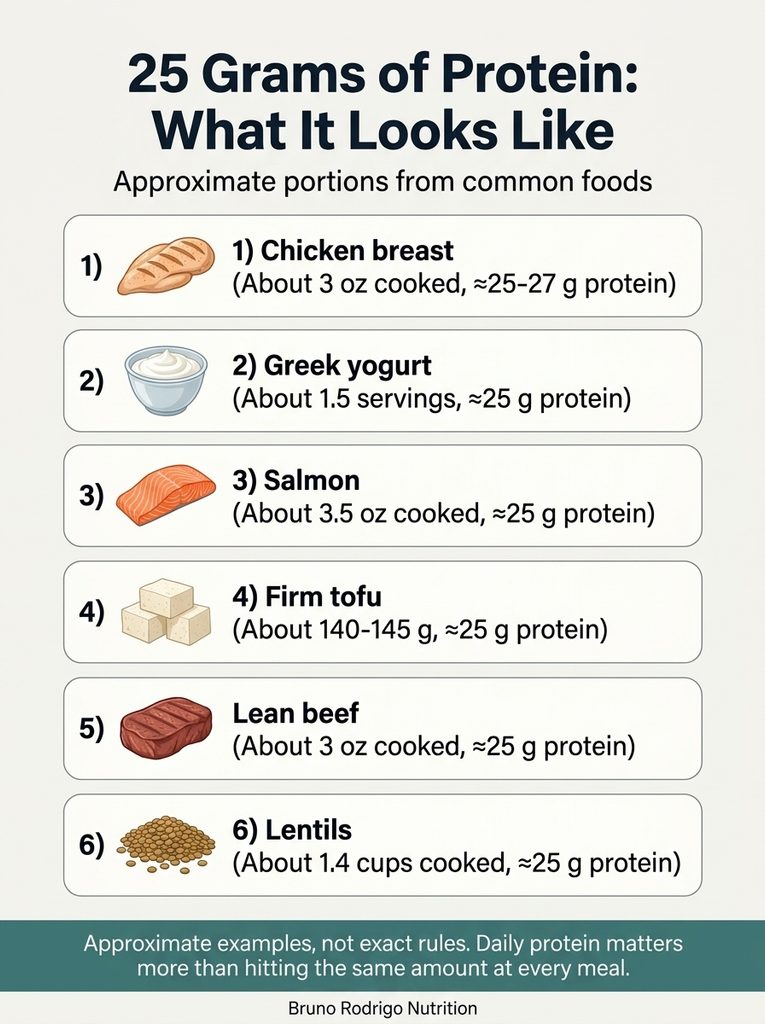
    Visual guide showing what about 25 grams of protein looks like from different foods such as chicken, Greek yogurt, salmon, tofu and lentils.

    A 2024 review concluded that the importance of protein distribution for long-term muscle outcomes remains uncertain and is influenced by age, physical activity, total protein intake and protein quality.[5]

    A commonly used practical strategy is approximately 0.4 g/kg of protein per meal, distributed across several meals.[6]

    For a 75 kg adult, that would be approximately:

    30 g protein per meal

    But this should not become:

    “Your body cannot use more than 30 grams of protein.”

    That claim is incorrect.

    Protein consumed beyond the amount that maximally stimulates muscle protein synthesis at a particular moment is not simply discarded. Amino acids have many other metabolic and structural roles, digestion occurs over time, mixed meals alter absorption, and larger meals can still contribute meaningfully to daily protein intake.[6]

    A better practical rule is:

    Daily protein first. Distribution second.

    If your daily intake is very low, obsessing over protein timing will not solve the main problem.

    If your daily intake is already adequate, spreading protein reasonably across three to five eating occasions may be practical — especially if most of your current protein is concentrated in one meal.

    Does Protein Quality Matter for Muscle Gain?

    Yes — but protein quality should not be reduced to a simplistic “good protein versus bad protein” label.

    Proteins differ in:

    • essential amino acid content;
    • leucine content;
    • digestibility;
    • the amount of protein typically consumed per serving;
    • and the food matrix in which that protein is delivered.

    Essential amino acids are particularly important because the body cannot synthesize them in sufficient amounts on its own.

    Leucine also plays an important signaling role in stimulating muscle protein synthesis.

    This helps explain why proteins such as dairy, eggs, meat and fish often produce a robust muscle protein synthesis response: they generally provide all essential amino acids in relatively high concentrations and are highly digestible.

    But that does not mean:

    animal protein = muscle building
    plant protein = ineffective

    The real evidence is more nuanced.

    Animal vs Plant Protein for Muscle Gain

    People can build muscle while eating vegetarian or vegan diets.

    The important question is not whether a protein came from a plant or an animal. It is whether the overall diet supplies enough total protein and enough essential amino acids to support the person’s needs.
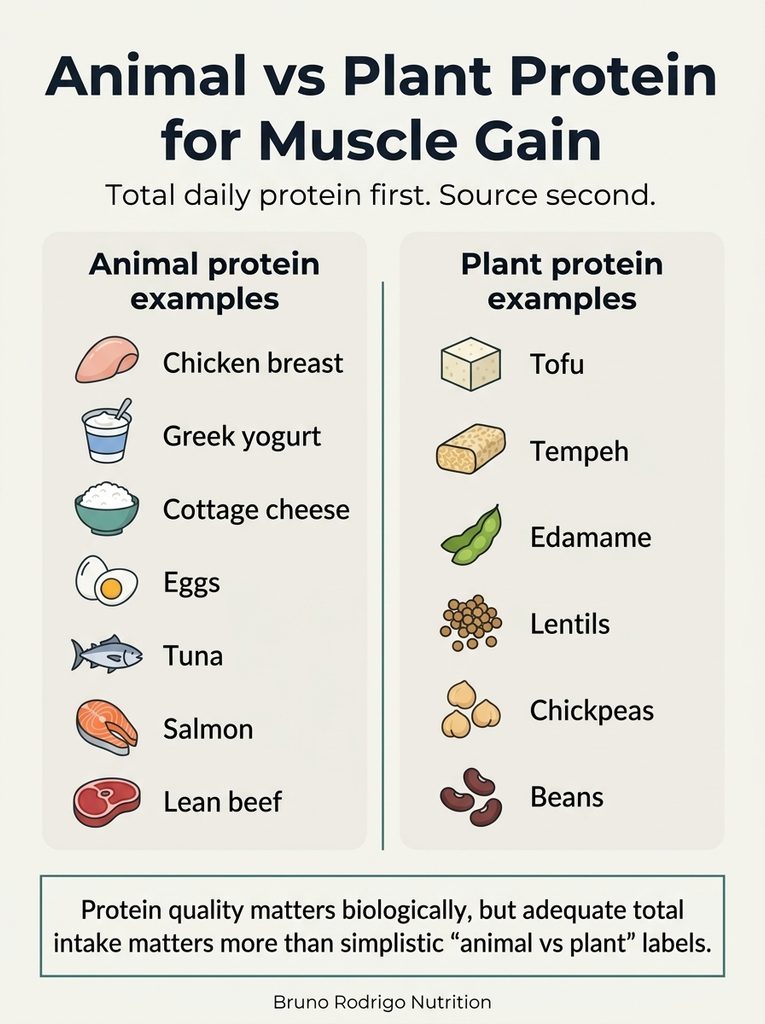
    Comparison infographic of animal and plant protein foods for muscle gain showing examples and the key message that total daily protein matters most.

    A 2025 systematic review and meta-analysis of randomized trials found a small pooled advantage of animal protein for muscle mass, driven mainly by comparisons with non-soy plant proteins and plant-based diets. However, there was no significant difference between soy and milk protein for muscle mass, and no overall difference between plant and animal protein for strength.[7]

    A 2026 meta-analysis of longer-term interventions lasting at least six months found no statistically significant differences in lean body mass, muscle strength or physical performance between plant- and animal-protein supplementation overall, although most of the plant-protein evidence involved soy and the studies were heterogeneous.[8]

    And controlled resistance-training studies demonstrate that muscle can increase on plant-based diets when protein intake is sufficient.[9]

    So the useful conclusion is not:

    animal protein is always superior.

    Nor is it:

    protein source never matters.

    A more defensible conclusion is:

    Protein quality matters biologically, but total intake, essential amino acid availability and the overall dietary pattern matter more than simply labeling foods “animal = good” and “plant = bad.”

    For someone eating mostly plant protein, practical strategies can include:

    • eating enough total protein;
    • using a variety of legumes, soy foods, grains, nuts and seeds;
    • emphasizing higher-protein plant foods such as tofu, tempeh, edamame and legumes;
    • and, when useful, using soy, pea or blended plant-protein products for convenience.

    You do not need to combine complementary plant proteins at every individual meal. Variety across the overall diet is more important.

    High-Protein, Low-Calorie Foods for Muscle Gain

    Protein density becomes particularly useful when your goal is to build or preserve muscle without turning muscle gain into uncontrolled weight gain.

    Foods such as:

    • chicken breast;
    • tuna;
    • lean beef;
    • nonfat Greek yogurt;
    • low-fat cottage cheese;

    provide relatively large amounts of protein for their calorie content.

    That can make them useful when calorie intake is limited or when body recomposition is the goal.

    By contrast, foods such as nuts and peanut butter do contain protein, but they are primarily calorie-dense fat sources.

    For example, calling peanut butter a “high-protein food” without considering calories can be misleading if someone is using it primarily to reach a high protein target.

    That does not make peanut butter unhealthy.

    It simply means:

    “contains protein” and “protein-dense” are not the same thing.

    Likewise, lentils are less protein-dense than chicken breast, but bring fiber, carbohydrates, folate and other nutrients that chicken does not provide.

    The purpose of protein density is therefore decision support, not another system for classifying foods as good or bad.
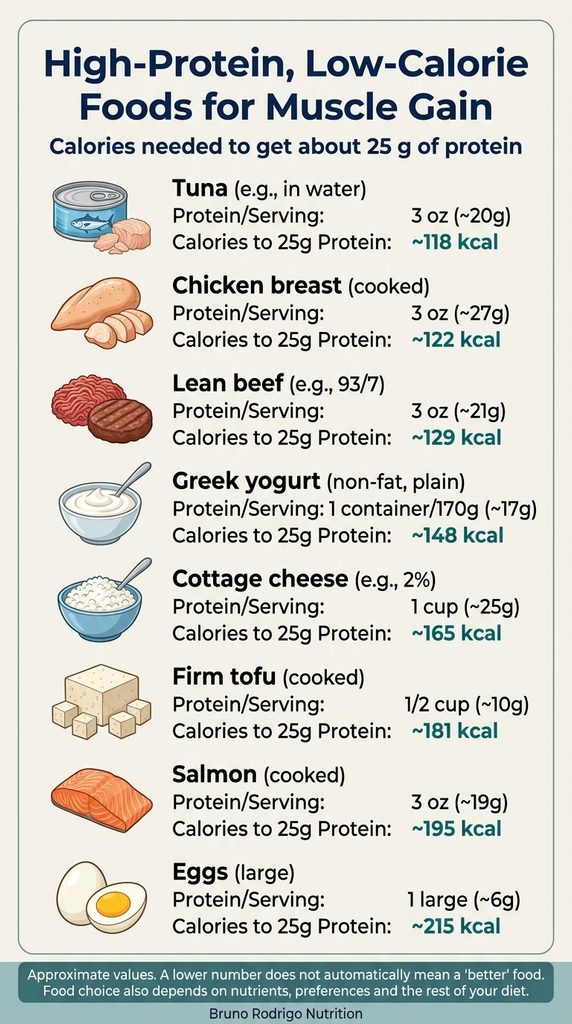
    Infographic showing high-protein, low-calorie foods for muscle gain ranked by calories needed to get about 25 grams of protein.

    Do You Need a Calorie Surplus to Build Muscle?

    Not always.

    Muscle growth requires energy, but a deliberate calorie surplus is not an absolute prerequisite for every person in every situation.

    People who are new to resistance training, returning after time away from training, or carrying more stored body fat may sometimes gain muscle while maintaining weight or even losing fat.

    A recent randomized trial, for example, reported gains in fat-free mass in resistance-trained participants consuming either maintenance calories or a moderate calorie deficit while protein intake was high.[10]

    However, chronic energy restriction generally makes maximizing muscle gain more difficult.

    A meta-analysis found that energy deficits impaired gains in lean mass during resistance training, even though strength gains could still occur.[11]

    For leaner and more experienced trainees whose main goal is maximizing hypertrophy, a small, controlled energy surplus can therefore be useful.

    But more is not necessarily better.

    A study comparing maintenance calories with moderate and larger surpluses in resistance-trained individuals found that faster body-weight gain was associated primarily with greater increases in skinfold thickness rather than clearly superior muscle growth.[12]

    A separate randomized trial using approximately 500 additional kcal/day alongside resistance training produced weight gain that included lean body mass, but the study does not establish that every person needs a 500-kcal surplus or that larger surpluses are optimal.[13]

    The practical conclusion is:

    Adequate energy supports muscle growth, but aggressive “bulking” can add more body fat without proportionally increasing muscle gain.

    Your ideal energy intake depends on training status, body composition, rate of progress and whether your priority is maximum muscle gain or slower body recomposition.

    When Protein Powder Helps — and When It Doesn’t

    Protein powder is a tool, not a requirement.

    It can be useful when:

    • you struggle to reach your protein target with regular meals;
    • appetite is low;
    • you need a portable option;
    • you want protein with relatively few additional calories;
    • eating soon after training is convenient but a full meal is not.

    Whey, casein, soy, pea and blended proteins can all contribute to daily protein intake.

    Recent evidence continues to support protein supplementation alongside resistance training as a useful way to increase lean mass when it meaningfully increases protein intake.[14]

    But protein powder does not become uniquely muscle-building because it comes in a shaker.

    If you can comfortably meet your protein needs through foods you enjoy, there is no requirement to use a supplement.

    And the opposite mistake is also common:

    adding several protein shakes to a diet that already contains enough protein and expecting dramatically faster muscle growth.

    Once protein intake is sufficient, more protein tends to produce diminishing returns.

    The training stimulus still matters.

    Common High-Protein Diet Mistakes for Muscle Gain

    Choosing Foods Only by Protein per 100 Grams

    A 100-gram comparison can be useful for nutrient databases, but it does not always reflect how people eat.

    One hundred grams of milk, Greek yogurt, eggs, chicken and lentils represent very different real-world portions.

    That is why protein per practical serving is often more useful.

    Treating Every Food That Contains Protein as a High-Protein Food

    Nuts, seeds, whole grains and many vegetables contribute some protein.

    That does not necessarily make them efficient primary protein sources.

    A food can contain useful protein while serving another main nutritional role.

    Adding Protein Without Progressive Resistance Training

    Protein cannot replace the training stimulus.

    The 2026 American College of Sports Medicine position stand, synthesizing 137 systematic reviews and more than 30,000 participants, confirmed that progressive resistance training increases muscle size and that training volume meaningfully influences hypertrophy.[4]

    If muscle gain is the goal, nutrition supports the training program — it does not substitute for one.

    Assuming More Protein Always Means More Muscle

    Increasing a very low protein intake can matter.

    Increasing an already sufficient intake indefinitely is a different question.

    Meta-analytic evidence suggests diminishing returns once total intake is around the range commonly used for hypertrophy, rather than a linear relationship in which twice as much protein produces twice as much muscle.[2,3]

    Ignoring Calories

    Protein-rich foods still contain calories.

    This is particularly relevant when someone is trying to gain muscle while limiting fat gain.

    Two foods can provide the same amount of protein with very different calorie totals.

    That does not automatically make the lower-calorie food healthier, but it may make it more useful in a particular context.

    Getting Almost All Your Protein at One Meal

    A large protein-rich dinner can contribute substantially to your daily target.

    But if breakfast and lunch contain almost no protein, distributing some of that intake earlier in the day may make the target easier to reach and provide more opportunities to stimulate muscle protein synthesis.

    You do not need perfect distribution.

    You do need enough protein overall.

    Relying Only on Supplements

    Protein powder can improve convenience.

    It cannot replace the nutritional diversity of an entire diet.

    Whole protein-rich foods can also supply iron, calcium, vitamin B12, omega-3 fatty acids, fiber and other nutrients depending on the source.

    Use supplements to solve a practical problem — not because “real muscle gain” supposedly requires them.

    Overlooking Plant Protein

    A vegetarian or vegan diet does not prevent hypertrophy.

    Plant-based diets may require a little more planning because individual plant foods vary in protein density, digestibility and essential amino acid composition.

    That is a planning issue, not evidence that plant-based muscle gain is impossible.[7–9]

    Trusting “High Protein” Marketing Without Checking the Label

    A product can be marketed as “protein,” “fitness” or “high protein” while providing surprisingly little protein relative to its calories.

    Look at:

    1. grams of protein per serving;
    2. calories per serving;
    3. actual serving size;
    4. what the product contributes to your overall diet.

    The front of the package is marketing.

    The nutrition information is the useful part.
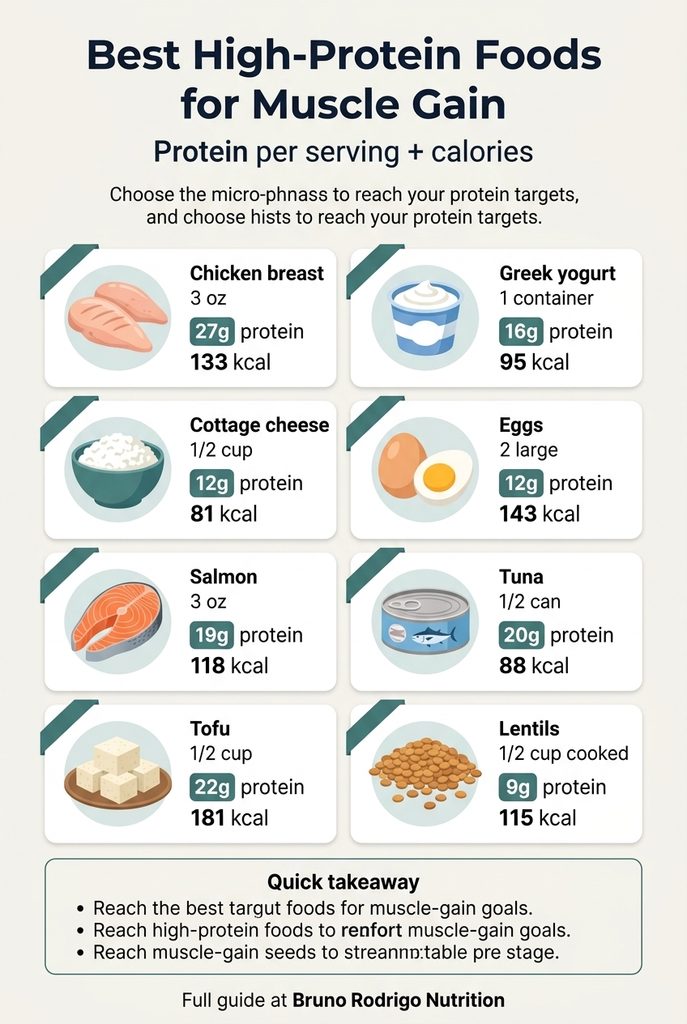
    Pinterest-style cheat sheet showing the best high-protein foods for muscle gain with serving size, protein and calories.

    Frequently Asked Questions

    What are the best high-protein foods for muscle gain?

    Good options include chicken breast, lean beef, tuna, Greek yogurt, cottage cheese, eggs, fish, milk, tofu, tempeh, edamame and lentils. The best choices depend on your total protein target, calorie needs, dietary preferences and the rest of your diet.

    How much protein should I eat to build muscle?

    For many adults performing resistance training, around 1.6 g/kg of body weight per day is a useful evidence-based reference point. Individual requirements can vary, and consuming substantially more protein does not automatically produce greater muscle gain.[2,3]

    How much protein should I eat at each meal?

    There is no universal mandatory amount. Once daily protein intake is adequate, distributing protein across several meals is a reasonable strategy. Around 0.4 g/kg per meal is often used as a practical reference, but daily total intake remains the higher priority.[5,6]

    Can you build muscle with plant protein?

    Yes. Resistance-training studies show that plant-based diets can support increases in muscle mass when total protein intake and essential amino acid intake are adequate. Some studies find small differences between specific plant and animal protein sources, but the evidence does not support the claim that plant protein cannot build muscle.[7–9]

    Is protein powder necessary for muscle gain?

    No. Protein powder is mainly a convenient way to increase protein intake. If you can reach your protein needs through regular food, supplementation is optional.

    Do you need to eat protein immediately after your workout?

    Not necessarily. Resistance exercise increases muscle sensitivity to protein for an extended period, and total daily intake is more important than hitting a tiny “anabolic window.” Eating a protein-containing meal reasonably close to training can be convenient, but missing a shake immediately after your last set will not ruin your progress.

    Do you need a calorie surplus to gain muscle?

    Not in every situation. Muscle gain can occur at maintenance calories and sometimes during an energy deficit, particularly depending on training status and body composition. However, prolonged energy restriction can reduce lean-mass gains, while a modest surplus may be useful for maximizing hypertrophy in lean, experienced trainees.[10–13]

    Is the food with the most protein always the best choice?

    No. Protein quantity is only one factor. Calories, essential amino acids, micronutrients, dietary preferences, cost, convenience and the rest of your eating pattern also matter.

    The Bottom Line

    High-protein foods make muscle-building nutrition easier, but they are not muscle-building shortcuts.

    The most useful approach is to start with the fundamentals:

    Progressive resistance training → sufficient daily protein → adequate energy → consistent execution.

    Then choose protein-rich foods that make those fundamentals practical for you.

    Chicken, fish, dairy, eggs, lean meat, tofu, tempeh, lentils and edamame can all contribute.

    The goal is not to find the single “best” protein food.

    It is to build an eating pattern that provides enough protein, fits your energy needs, supports training and is realistic enough to maintain.

    References

    Li Y, Qin G, Wang Z, Zhang J. Dose-structure-population interactions of protein supplementation combined with resistance training on body composition: a Bayesian network meta-analysis with dose-response modeling. Frontiers in Nutrition. 2026;13:1860234. PMID: 42625626.
    https://pubmed.ncbi.nlm.nih.gov/42625626/

    U.S. Department of Agriculture, Agricultural Research Service. FoodData Central. Nutrient values used in the food comparison table were drawn from current FoodData Central Foundation Foods and SR Legacy records; values were rounded and calculations of protein per 100 kcal and calories per 25 g protein were derived from those values. FoodData Central Foundation Foods current release: April 2026.
    https://fdc.nal.usda.gov/

    Morton RW, Murphy KT, McKellar SR, et al. A systematic review, meta-analysis and meta-regression of the effect of protein supplementation on resistance training-induced gains in muscle mass and strength in healthy adults. British Journal of Sports Medicine. 2018;52(6):376–384. PMID: 28698222.
    https://pubmed.ncbi.nlm.nih.gov/28698222/

    Tagawa R, Watanabe D, Ito K, et al. Systematic review and meta-analysis of protein intake to support muscle mass and function in healthy adults. Journal of Cachexia, Sarcopenia and Muscle. 2022. PMID: 35187864.
    https://pubmed.ncbi.nlm.nih.gov/35187864/

    Currier BS, D’Souza AC, Fiatarone Singh MA, et al. American College of Sports Medicine Position Stand. Resistance Training Prescription for Muscle Function, Hypertrophy, and Physical Performance in Healthy Adults: An Overview of Reviews. Medicine & Science in Sports & Exercise. 2026;58(4):851–872. PMID: 41843416.
    https://pubmed.ncbi.nlm.nih.gov/41843416/

    Layman DK. Impacts of protein quantity and distribution on body composition. Frontiers in Nutrition. 2024;11:1388986. PMID: 38765819.
    https://pubmed.ncbi.nlm.nih.gov/38765819/

    Schoenfeld BJ, Aragon AA. How much protein can the body use in a single meal for muscle-building? Implications for daily protein distribution. Journal of the International Society of Sports Nutrition. 2018;15:10. PMID: 29497353.
    https://pubmed.ncbi.nlm.nih.gov/29497353/

    Reid-McCann RJ, Brennan SF, Ward NA, et al. Effect of Plant Versus Animal Protein on Muscle Mass, Strength, Physical Performance, and Sarcopenia: A Systematic Review and Meta-analysis of Randomized Controlled Trials. Nutrition Reviews. 2025;83(7):e1581–e1603. PMID: 39813010.
    https://pubmed.ncbi.nlm.nih.gov/39813010/

    Yimam MA, Roberts J, O’Callaghan A, et al. Long-term effects of plant vs. animal protein supplementation on body composition, muscle strength, physical performance, and cardiometabolic risk factors in adults: a systematic review and meta-analysis of randomized controlled trials. Frontiers in Nutrition. 2026;13:1813846. PMID: 41994089.
    https://pubmed.ncbi.nlm.nih.gov/41994089/

    Monteyne AJ, Coelho MOC, Murton AJ, et al. Vegan and Omnivorous High Protein Diets Support Comparable Daily Myofibrillar Protein Synthesis Rates and Skeletal Muscle Hypertrophy in Young Adults. The Journal of Nutrition. 2023;153(6):1680–1695. PMID: 36822394.
    https://pubmed.ncbi.nlm.nih.gov/36822394/

    Vargas-Molina S, García-Palumbo A, García-Sillero M, et al. Comparison of two nutritional protocols in body re-composition of resistance-trained participants. European Journal of Applied Physiology. 2026;126(7):4019–4030. PMID: 41940947.
    https://pubmed.ncbi.nlm.nih.gov/41940947/

    Murphy C, Koehler K. Energy deficiency impairs resistance training gains in lean mass but not strength: a meta-analysis and meta-regression. Scandinavian Journal of Medicine & Science in Sports. 2022;32(1):125–137. PMID: 34623696.
    https://pubmed.ncbi.nlm.nih.gov/34623696/

    Helms ER, Spence A-J, Sousa C, et al. Effect of Small and Large Energy Surpluses on Strength, Muscle, and Skinfold Thickness in Resistance-Trained Individuals: A Parallel Groups Design. Sports Medicine – Open. 2023;9(1):102. PMID: 37914977.
    https://pubmed.ncbi.nlm.nih.gov/37914977/

    Sanchez AD, Reynolds JC, Marinik EL, et al. A Randomized Trial of Healthy Weight Gain in Athletic Individuals. Medicine & Science in Sports & Exercise. 2024;56(8):1454–1466. PMID: 38537251.
    https://pubmed.ncbi.nlm.nih.gov/38537251/
  • FODMAP Reintroduction Plan: How to Test Foods and Personalize Your Diet

    FODMAP Reintroduction Plan: How to Test Foods and Personalize Your Diet

    FODMAP reintroduction is the second phase of the low FODMAP diet. After symptoms improve during the initial restriction phase, you keep your background diet low FODMAP while systematically challenging one FODMAP group at a time.

    A typical challenge uses one suitable food over three days, with the portion changing according to the current reintroduction protocol, followed by time for symptoms to settle before the next challenge. The goal is to identify which FODMAPs — and which amounts — you tolerate, then use those results to build a less restrictive personalized diet.

    Current challenge foods and serving amounts should be checked in the Monash FODMAP App because food testing and recommendations can change over time.

    New to the full process? Read Low FODMAP Diet: An Evidence-Based Guide.

    Key Takeaways

    • Reintroduction begins after symptoms have meaningfully improved during restriction.
    • Test one FODMAP group at a time.
    • Keep the rest of the diet relatively low FODMAP during each challenge.
    • Current Monash guidance uses 3-day food challenges.
    • There is no mandatory universal order for testing the FODMAP groups.
    • A symptom response can be dose-dependent and should not automatically become a permanent food ban.
    • Challenge foods and serving amounts can change as foods are retested.
    • The endpoint is personalization, not returning to permanent restriction.

    What Is FODMAP Reintroduction?

    FODMAP reintroduction is Step 2 of the low FODMAP diet. It begins after symptoms have meaningfully improved during the initial restriction phase. During reintroduction, the background diet stays relatively low FODMAP while individual FODMAP groups are challenged in a structured way.[1]

    The purpose is not to test every food you removed one by one. The challenge food is a tool for testing tolerance to a FODMAP group — such as fructose, lactose, sorbitol, mannitol, fructans or galacto-oligosaccharides (GOS).

    Restriction asks: “Do FODMAPs appear to matter?”
    Reintroduction asks: “Which FODMAPs matter, and how much can I tolerate?”

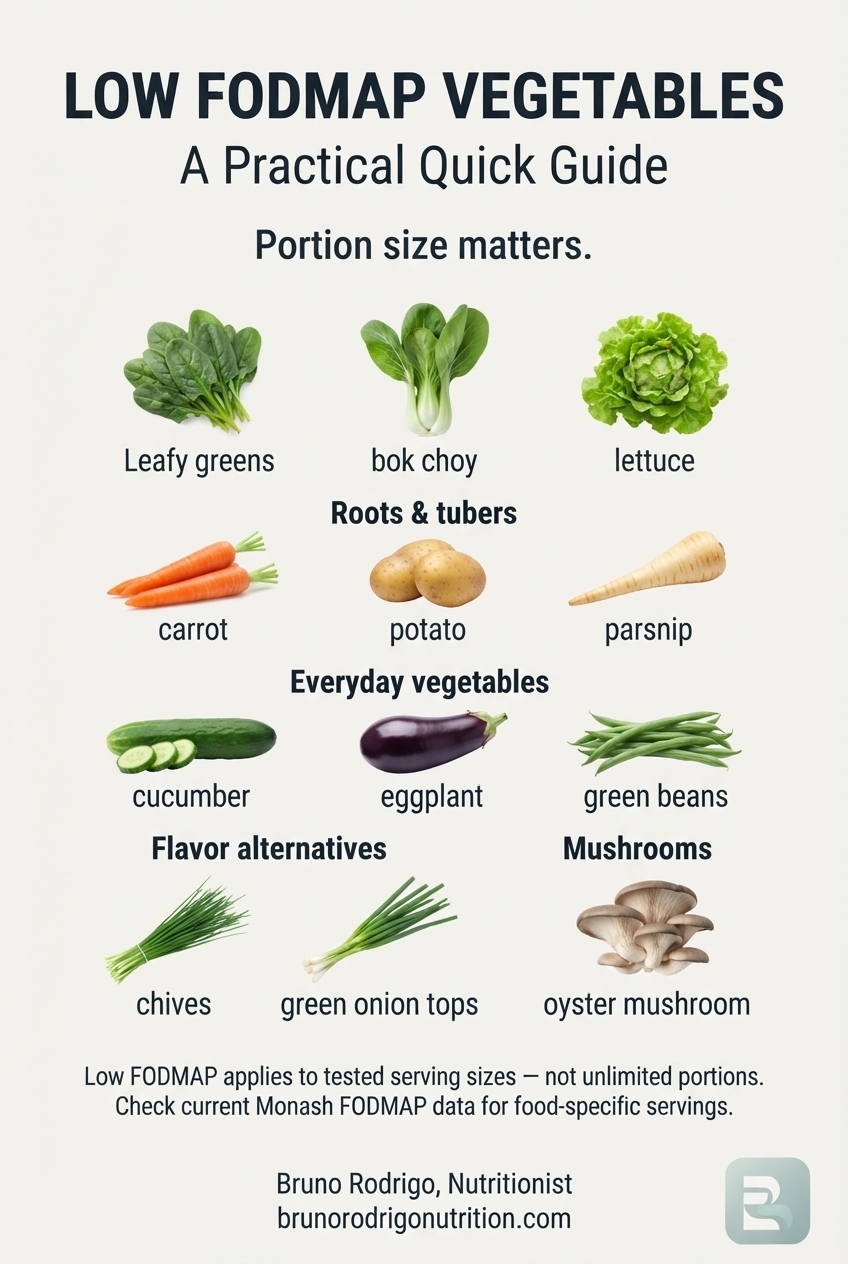
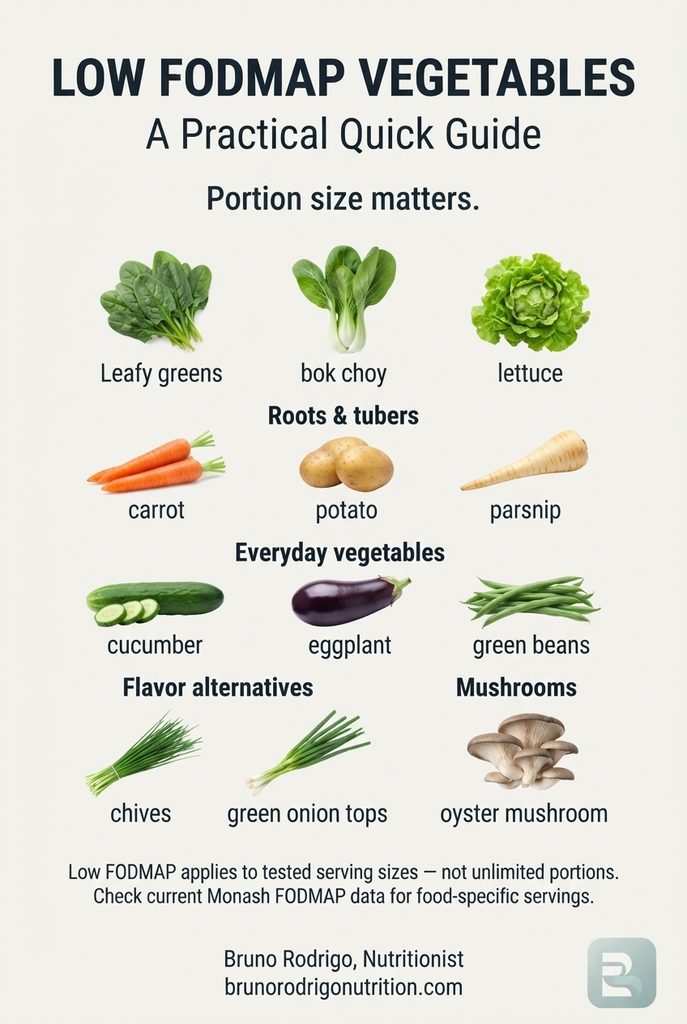
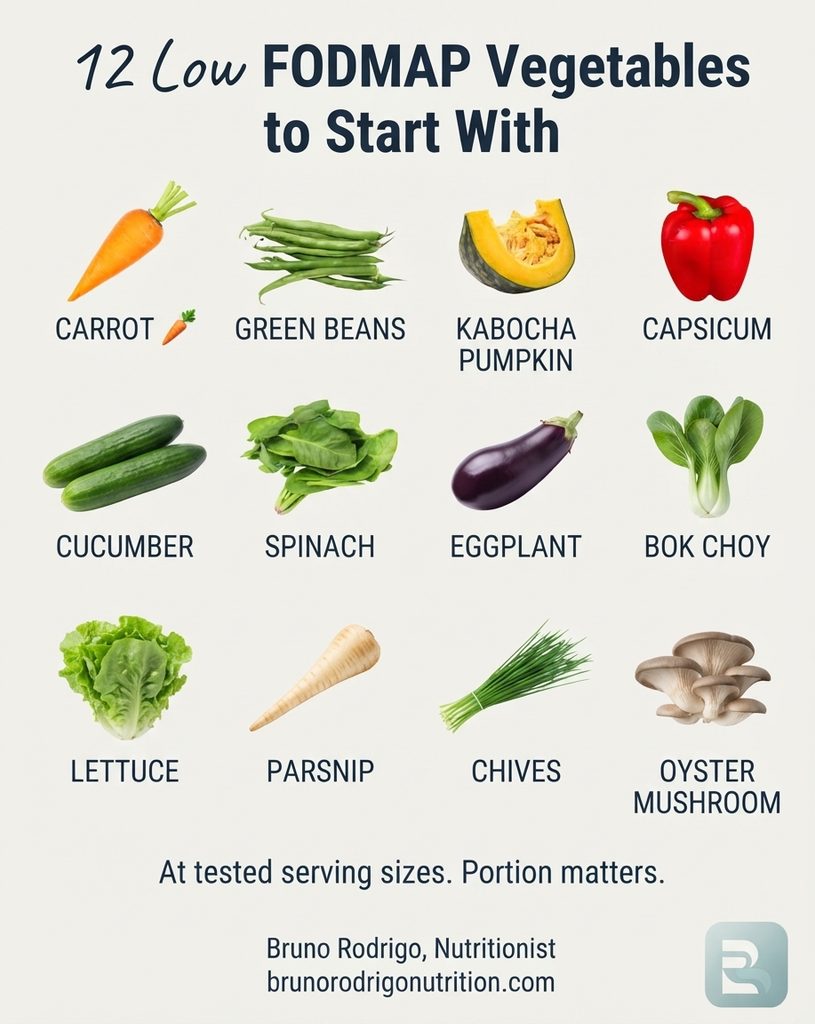
    See Low FODMAP Vegetables

    This distinction matters because the goal is not to create a permanent list of “safe” and “unsafe” foods. It is to learn which fermentable carbohydrates are relevant to your symptoms, at which amounts, so the long-term diet can become less restrictive.

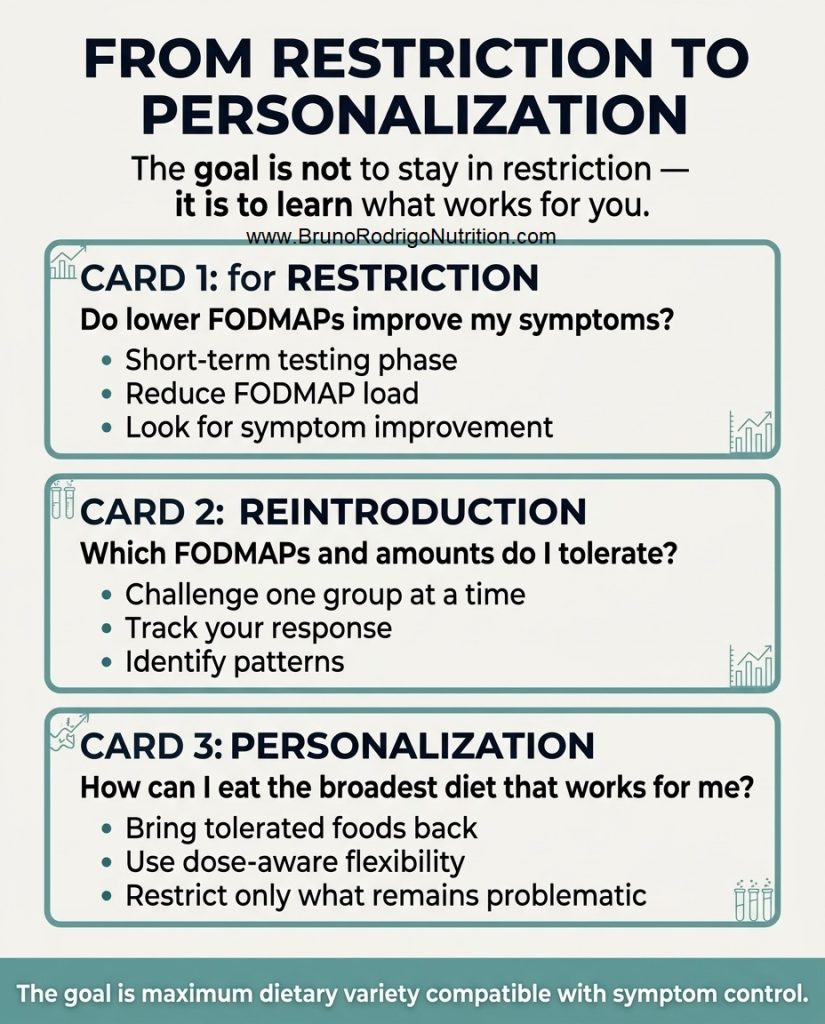
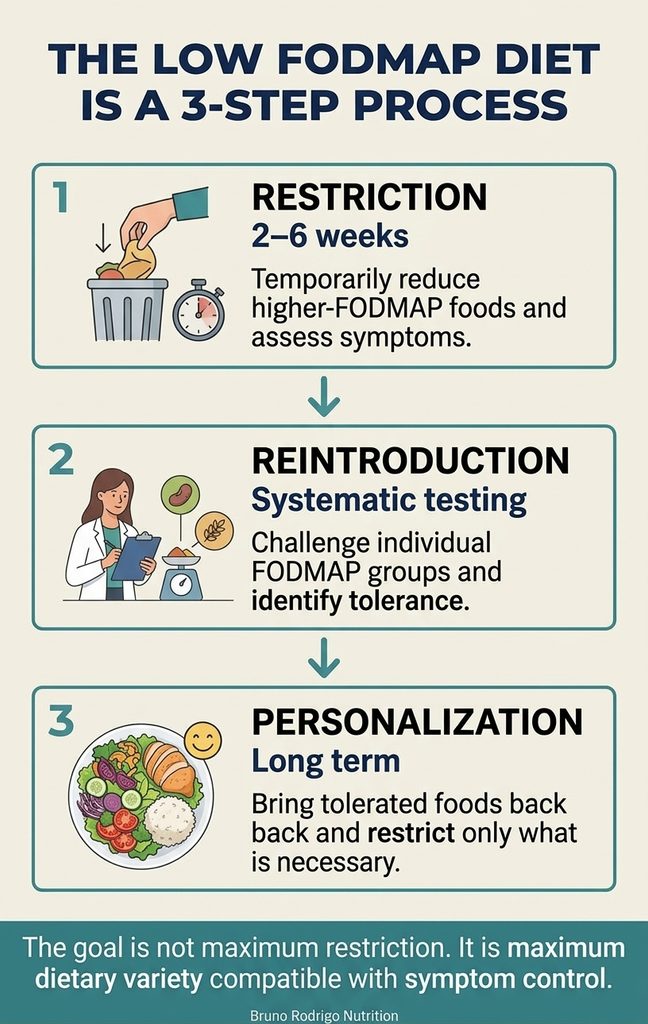
    Comparison of restriction, reintroduction and personalization in the low FODMAP diet, showing the main question answered by each phase.
    Each phase of the low FODMAP process answers a different question.

    When to Start the Low FODMAP Reintroduction Phase

    Symptoms should first be reasonably controlled

    Reintroduction is easiest to interpret when Step 1 has produced a clear, meaningful improvement and symptoms are reasonably stable. Monash recommends moving to Step 2 when symptoms improve during the initial low FODMAP phase.[2]

    You do not need to wait for a completely symptom-free week. The practical goal is a stable enough baseline that a change during a challenge is easier to recognize.

    Do not stay in restriction just because you feel better

    Feeling better during Step 1 is a reason to move forward, not a reason to remain strictly low FODMAP indefinitely.

    Restriction can tell you whether lowering FODMAP exposure appears to help. Reintroduction is what begins to separate the restrictions that may actually be necessary from those that may not be.

    Step 1 tests whether reducing FODMAPs helps. Step 2 tests which restrictions are actually necessary.

    What if your symptoms did not improve?

    If symptoms did not meaningfully improve after an appropriately implemented Step 1, extending restriction or removing more foods is not automatically the best next step.

    Monash notes that some people with IBS do not respond meaningfully to a low FODMAP approach and may need to consider other management strategies.[2]

    In that situation, reassessing the diagnosis, how the diet was implemented and other contributors to symptoms is generally more useful than forcing a reintroduction protocol onto an intervention that did not help.

    How to Reintroduce FODMAPs: A Step-by-Step Plan

    The basic principle is simple: keep most variables stable, challenge one FODMAP group at a time, record what happens, allow symptoms to settle, then repeat.

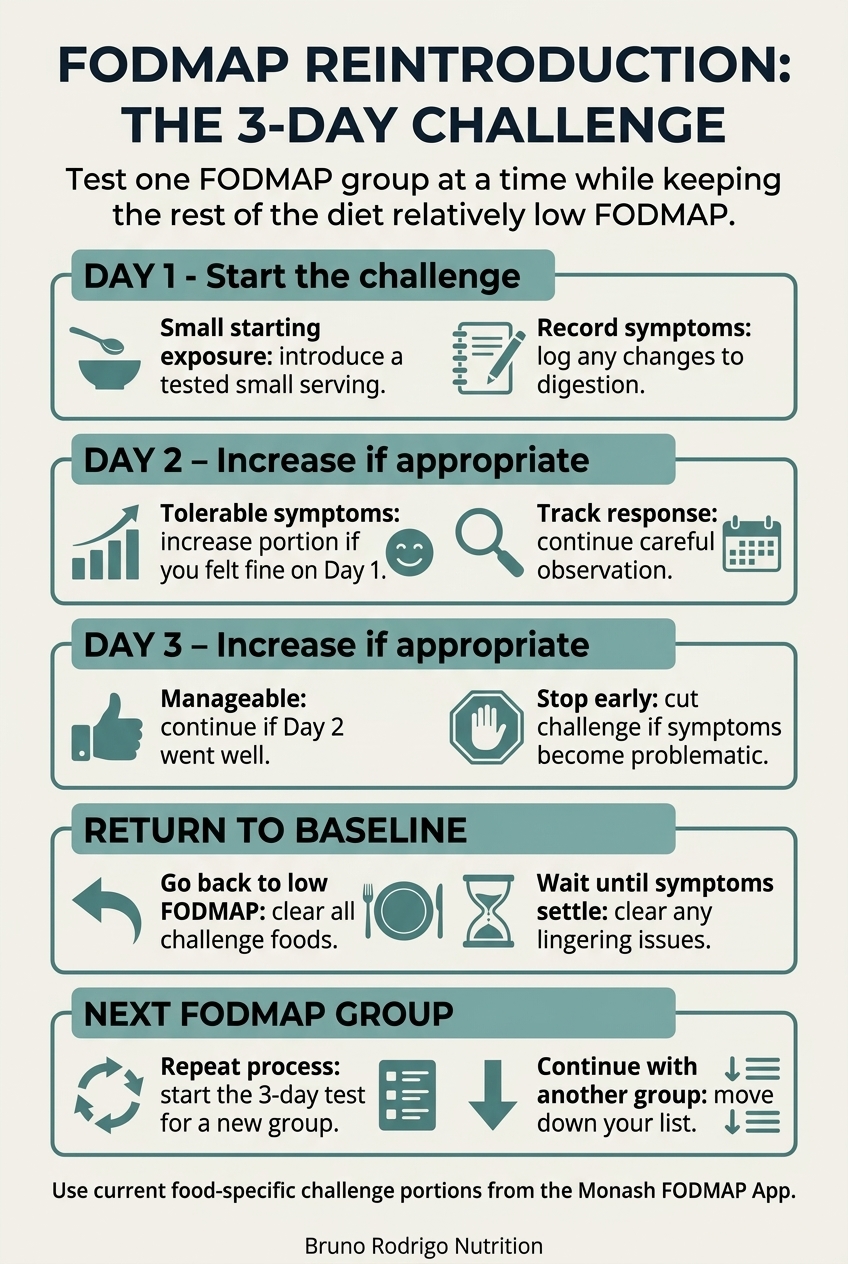
    Current Monash guidance describes Step 2 as an approximately 8–12 week phase and uses three-day food challenges.[1]

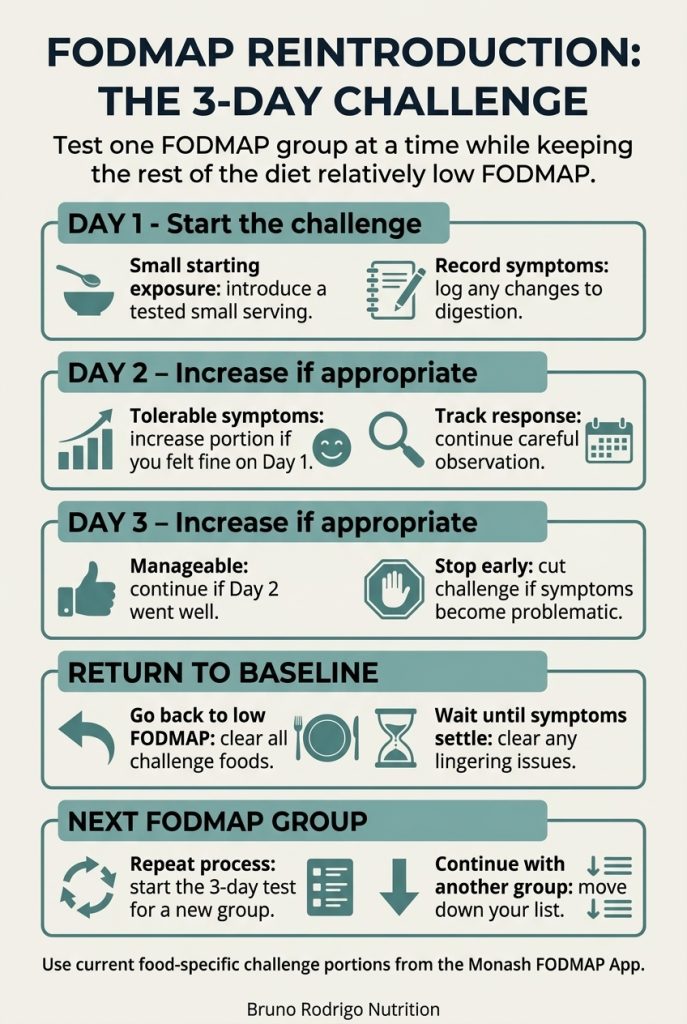
    Three-day FODMAP reintroduction challenge showing Day 1, Day 2, Day 3, return to baseline and next FODMAP group.
    A simple overview of how the FODMAP reintroduction phase works in practice.

    Step 1 — Keep a Stable Low FODMAP Background Diet

    During each challenge, keep the rest of your diet relatively low FODMAP and reasonably consistent.

    This reduces background “noise” and makes it easier to connect a meaningful symptom change with the FODMAP being tested.

    You do not need to make every meal identical. The goal is simply to avoid introducing several major dietary changes at the same time.

    Step 2 — Choose One FODMAP Group

    Monash currently separates reintroduction into the main FODMAP groups below.[1]

    FODMAP groupWhat you are testing
    FructoseTolerance to excess fructose
    LactoseTolerance to lactose
    SorbitolTolerance to sorbitol
    MannitolTolerance to mannitol
    FructansTolerance to fructans
    GOSTolerance to galacto-oligosaccharides

    Fructans can require additional nuance because different fructan-containing foods may not always produce identical responses. The purpose of the process is to build a useful tolerance map, not to reduce every result to a single permanent label.

    Step 3 — Choose a Suitable Challenge Food

    A useful challenge food should give a relatively clear test of the FODMAP group you are trying to assess.

    Current challenge foods and portions should be checked in the Monash FODMAP App rather than copied indefinitely from an old chart.

    This matters because Monash updated its reintroduction feature in 2025 after laboratory retesting found meaningful differences in the FODMAP content of several foods. Some challenge foods and serving recommendations were revised.[4]

    Check the current Monash FODMAP App before choosing a challenge food or serving progression.

    Step 4 — Complete the 3-Day Challenge

    Monash currently uses a three-day challenge. Exposure increases across the challenge according to the current food-specific protocol, provided symptoms remain tolerable.[3]

    Day 1 → challenge
    Day 2 → increase exposure if appropriate
    Day 3 → increase exposure if appropriate

    Avoid copying a generic progression such as “¼ cup → ½ cup → 1 cup” across foods. The appropriate quantities depend on the challenge food and current laboratory-tested guidance.

    If significant symptoms develop, a challenge does not need to be pushed through simply to complete all three days.[10]

    Step 5 — Record Symptoms

    Track the symptoms that are relevant to you in a consistent way. Examples include:

    • abdominal pain;
    • bloating or distension;
    • gas;
    • bowel habits;
    • urgency, when relevant;
    • overall symptom response.

    The goal is not perfect data collection. It is to create enough consistency to answer a practical question:

    Did this challenge produce a meaningful change from my baseline?

    Step 6 — Let Symptoms Return to Baseline

    Do not begin the next challenge while you are still clearly reacting to the previous one.

    Monash recommends a break of roughly 2–3 days between challenges, or until symptoms settle, while returning to the low FODMAP background diet.[3]

    This reduces the chance that symptoms from one challenge spill into the next and make the result harder to interpret.

    Step 7 — Repeat With the Other FODMAP Groups

    Repeat the same structured process with the remaining FODMAP groups.

    The full Step 2 process commonly takes around 8–12 weeks in Monash’s current three-step guidance, although the exact duration depends on the challenges completed and the time needed for symptoms to settle between them.[1]

    FODMAP Reintroduction Chart: How to Track Your Challenges

    FODMAP groupChallenge food*Day 1Day 2Day 3SymptomsInterpretationRetest later?
    Fructose
    Lactose
    Sorbitol
    Mannitol
    Fructans
    GOS

    *Choose the current challenge food and serving progression using up-to-date Monash FODMAP App guidance or professional advice.

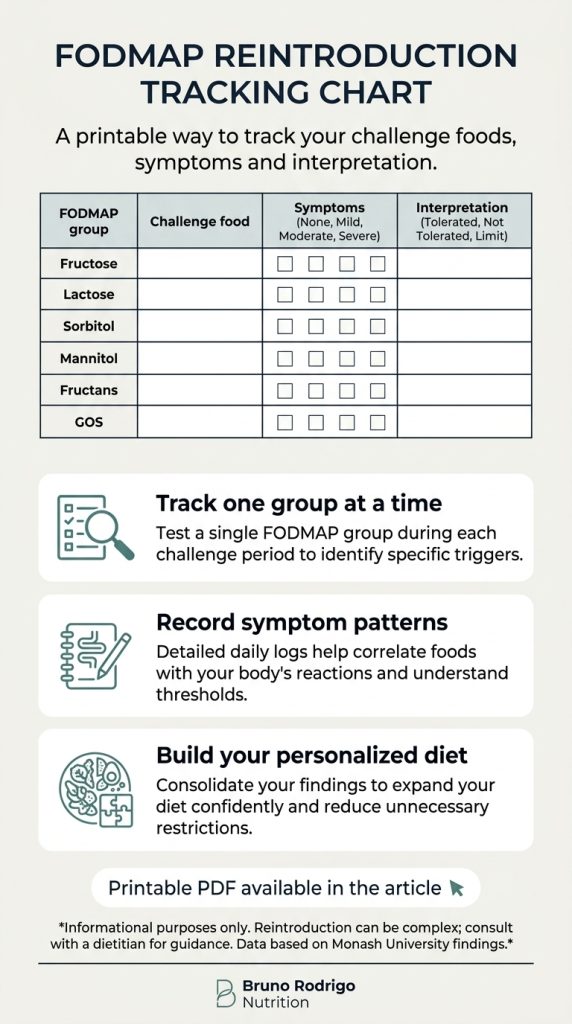
    Preview of a printable FODMAP reintroduction tracking chart with columns for challenge food, Day 1, Day 2, Day 3, symptoms and interpretation.
    A printable chart can help organize the reintroduction process without relying on outdated static food lists.

    Why Static Food-and-Dose Charts Can Become Outdated

    A FODMAP reintroduction chart that lists fixed challenge foods and serving sizes can become outdated as foods are retested.

    In April 2025, Monash University updated the Reintroduction feature in its FODMAP App after laboratory retesting found meaningful differences in the FODMAP content of several foods. Some foods had changed enough that they were no longer suitable for the same reintroduction challenge, and serving recommendations were revised.[4]

    This does not mean earlier laboratory tests were necessarily “wrong.” Agricultural foods naturally vary according to factors such as variety, growing conditions, geography and individual batches.

    For that reason, this guide explains how to run and interpret reintroduction, while current challenge foods and serving amounts should be checked using up-to-date laboratory-tested data.

    A static chart should organize your results — not pretend to be a permanent laboratory database.

    Which FODMAP Should You Reintroduce First?

    There is no single correct order for FODMAP reintroduction.

    Monash University specifically states that the FODMAP groups do not need to be challenged in a universal sequence. The best place to start depends on your goals, usual diet and confidence with the process.[5]

    You might start with a FODMAP you expect to tolerate well, which can make the process feel less intimidating. Another option is to test a suspected trigger first if getting a clear answer would be particularly useful. Or you may prioritize a FODMAP found in a food you eat frequently and would like to bring back into your usual diet.

    What matters more than the order is testing one FODMAP group at a time while keeping the rest of the diet reasonably stable.

    A practical question is therefore not:

    “Which FODMAP should everyone test first?”

    but:

    “Which result would be most useful for my diet right now?”

    How to Interpret a FODMAP Challenge

    The result of a FODMAP challenge is not simply pass or fail. What matters is how symptoms change as exposure increases and what that tells you about your practical tolerance.

    Current Monash guidance provides a useful framework for interpreting three-day challenges and translating those results into the personalization phase.[6]

    No Meaningful Symptoms

    If you complete the challenge without meaningful symptoms, that suggests good tolerance to that FODMAP within the amounts tested.

    In the personalization phase, this usually supports bringing foods containing that FODMAP back into the diet rather than continuing to restrict them unnecessarily.

    It does not mean that every food or every possible serving size will always be symptom-free, but it is useful practical evidence that broad restriction of that FODMAP may not be necessary.

    Mild or Dose-Dependent Symptoms

    If symptoms appear only when the portion becomes larger, the most useful conclusion may be that your tolerance is dose-dependent.

    That can be more valuable than a simple “yes/no” result. You may tolerate smaller or moderate servings well while developing symptoms only above a certain threshold.

    Monash’s current personalization guidance reflects this idea: people with mild-to-moderate responses may be able to include lower and moderate servings while limiting larger amounts.[6]

    Tolerance is often a threshold, not a switch.

    Clear or Severe Symptom Response

    A clear symptom response suggests that larger amounts of that FODMAP may currently be poorly tolerated.

    That information can guide the personalization phase, but it still does not necessarily mean removing every food containing that FODMAP permanently.

    Current Monash guidance supports keeping tolerated lower servings where possible and reconsidering tolerance over time because individual thresholds can change.[6]

    A Reaction Does Not Always Mean “Never Eat This Again”

    A symptom flare during reintroduction is useful information, but it should be interpreted in context rather than automatically becoming a lifelong food ban.

    A blinded randomized reintroduction study published in Gastroenterology enrolled 117 people with IBS. Among responders who completed reintroduction, symptom recurrence showed a highly individualized pattern, with an average of about 2.5 FODMAP triggers per participant. Fructans and mannitol were the most frequent triggers. Interestingly, the glucose control also met the study’s symptom-recurrence criterion in 26% of corresponding challenges.[7]

    That does not mean FODMAP reactions are imaginary. It shows why gastrointestinal symptoms cannot always be interpreted from one experience in isolation.

    IBS symptoms naturally fluctuate, and expectations, background symptoms and other factors can influence what happens during a challenge.

    Reintroduction therefore works best as a structured pattern-finding process, not as a collection of single food verdicts.

    Tolerance itself is also not necessarily fixed forever. Monash currently recommends reconsidering tolerance over time when appropriate.[6]

    A challenge result describes your current tolerance. It does not give a food a permanent label.

    Why Reintroduction Matters

    Reintroduction is not an optional extra after the “real” low FODMAP diet. It is the step that turns temporary restriction into useful information.

    Without reintroduction, someone who feels better during Step 1 may conclude that every food removed during restriction must remain excluded. In reality, individual responses vary considerably.[7]

    More Food Variety

    Foods that are tolerated can return to the diet, reducing the number of unnecessary restrictions.

    The objective is not to finish the process with the shortest possible food list, but with the broadest diet compatible with acceptable symptom control.

    Better Nutritional Flexibility

    Reintroducing tolerated foods makes it easier to obtain fiber, micronutrients and dietary variety from a wider range of foods.

    It can also make eating socially and practically easier than maintaining a highly restrictive Step 1 diet indefinitely.

    Less Unnecessary Restriction

    Long-term observational data support this direction.

    In a seven-year follow-up after dietitian-delivered low FODMAP education, 62% of participants reported following a personalized diet, while only 12% remained on strict FODMAP restriction. Food-related quality of life was lower among those continuing strict restriction.[8]

    A separate real-world evaluation of 184 patients also found that completing FODMAP reintroduction according to the dietetic protocol was associated with better long-term symptom outcomes, although the observational design cannot establish causality.[9]

    Greater Confidence Around Food

    Reintroduction can replace uncertainty with information.

    Instead of asking:

    “Is this food safe?”

    the person can begin asking:

    “How much of this FODMAP do I usually tolerate?”

    That is a much more flexible foundation for long-term eating.

    From Reintroduction to Personalization

    Reintroduction gives you data. Personalization turns those data into a sustainable diet.

    Once the main challenges have been completed, the goal is to translate the results into everyday eating rather than returning to strict Step 1 restriction.

    A simple framework is:

    Reintroduction resultLong-term implication
    Well toleratedBring the FODMAP back into the diet
    Tolerated at smaller/moderate amountsUse the amount that fits your individual threshold
    Poorly tolerated at larger amountsLimit the problematic exposure rather than automatically excluding every related food
    Unclear resultConsider repeating the challenge when symptoms are stable

    Monash’s current interpretation guidance follows the same general principle: no reaction supports greater liberalization; mild or moderate reactions may still allow smaller or moderate amounts; stronger reactions may justify limiting larger exposures while preserving tolerated portions when possible.[6]

    There can also be additional nuance within FODMAP categories. For example, fructan tolerance may differ across food sources, so a broad label such as “fructan intolerant” may sometimes be less useful than a more detailed pattern.[6]

    The goal is not to finish reintroduction with a longer list of foods to avoid. It is to finish with a clearer map of what you can eat.

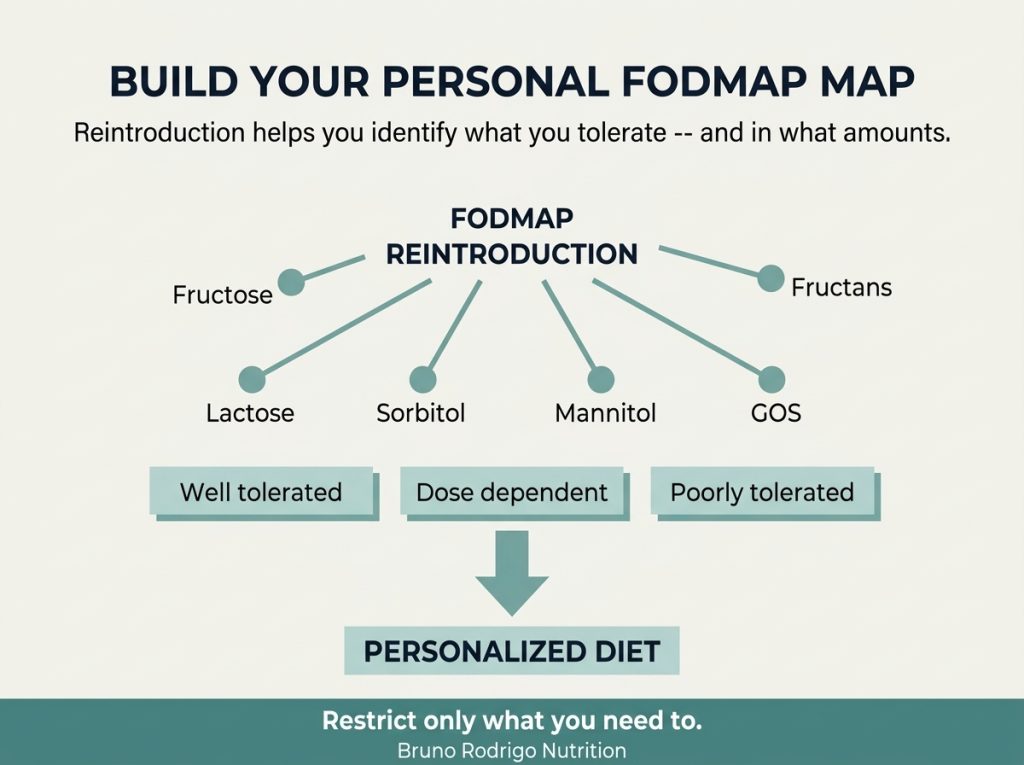
    Diagram showing FODMAP reintroduction leading to six FODMAP groups, interpreted as well tolerated, dose dependent or poorly tolerated, and ending in a personalized diet.
    Reintroduction helps turn symptom responses into a more flexible personalized diet.

    Common FODMAP Reintroduction Mistakes

    Starting Before Symptoms Are Reasonably Stable

    If symptoms are already fluctuating substantially, it becomes much harder to tell whether a challenge actually changed anything.

    Monash recommends beginning individual challenges when symptoms are reasonably well controlled.[3]

    Testing Several FODMAPs at Once

    If multiple FODMAP groups change simultaneously, the result becomes difficult to interpret.

    Challenge one group at a time whenever possible.

    Using a Poor Challenge Food

    A useful challenge food should primarily test the FODMAP group you are trying to assess.

    Mixed-FODMAP foods can create ambiguity and make it harder to know which fermentable carbohydrate caused the response.

    Copying an Old Challenge Chart

    Foods are retested.

    A challenge food that was appropriate several years ago may no longer contain the FODMAP profile or dose expected from older data. Monash revised its reintroduction foods and serving sizes in 2025 for exactly this reason.[4]

    Changing the Rest of Your Diet at the Same Time

    Reintroduction works best when the background diet remains relatively stable and low FODMAP, reducing competing explanations for symptom changes.[10]

    Pushing Through Significant Symptoms Just to Complete Three Days

    The three-day structure is a tool, not a requirement to ignore unpleasant symptoms.

    Monash guidance notes that a challenge can be stopped when significant symptoms develop, with the result interpreted accordingly.[10]

    Treating Mild Gas or Bloating as Automatic Failure

    Some gastrointestinal gas and distension are normal physiological responses to fermentation.

    The clinically useful question is whether the response is meaningful enough to affect comfort or daily life, not whether absolutely no sensation occurs.

    Starting the Next Challenge Before Symptoms Settle

    Monash recommends allowing symptoms to return to baseline between challenges, often with a few low-FODMAP background days.[3]

    Testing Foods Instead of Learning About FODMAP Groups

    The food is the testing vehicle.

    The larger goal is to understand tolerance to the fermentable carbohydrate involved — and, when relevant, whether tolerance depends on dose or food source.

    Never Converting the Results Into a Personalized Diet

    Collecting challenge results without liberalizing tolerated foods defeats much of the purpose of Step 2.

    Reintroduction should lead somewhere: toward a broader, more flexible long-term diet.

    When to Get Professional Help

    Many people understand the basic logic of reintroduction easily. The difficult part is often interpreting inconsistent symptoms without making the diet progressively more restrictive.

    Professional guidance becomes particularly useful when:

    • symptoms remain unstable between challenges;
    • several different FODMAP groups appear to trigger symptoms;
    • challenge results are inconsistent or difficult to interpret;
    • your diet has already become very restricted;
    • you are afraid to reintroduce foods despite good symptom control;
    • nutritional adequacy or unintentional weight loss is a concern;
    • other gastrointestinal conditions may be contributing to symptoms;
    • or you have not received an appropriate assessment for persistent gastrointestinal symptoms.

    Monash recommends working with a dietitian experienced in the FODMAP approach, particularly for selecting challenge foods and doses and interpreting reintroduction results.[11]

    The purpose of professional guidance should not be to identify the maximum number of foods you can avoid.

    It should be to obtain clearer information with the minimum necessary restriction.

    Frequently Asked Questions

    How long does FODMAP reintroduction take?

    Monash University currently describes the reintroduction phase as approximately 8–12 weeks, although the exact duration varies according to the challenges completed and symptom recovery between them.[1]

    How many days should a FODMAP challenge last?

    Monash currently uses three-day challenges, with one suitable challenge food consumed daily according to the current food-specific protocol.[1]

    Which FODMAP should I reintroduce first?

    There is no mandatory universal order. The first challenge can be selected according to confidence, suspected tolerance or the practical importance of that FODMAP in your usual diet.[5]

    Should I stay low FODMAP during reintroduction?

    Generally, yes. During Step 2, the background diet remains relatively low FODMAP while one FODMAP group is challenged at a time, helping make symptom responses easier to interpret.[1]

    What if I get symptoms during a challenge?

    Record what happened and allow symptoms to settle before moving to the next challenge. A reaction helps define your tolerance at the tested dose, but it should not automatically be interpreted as a permanent ban on every food containing that FODMAP.

    Do I need to reintroduce every food separately?

    No. The purpose is primarily to test FODMAP groups and tolerance levels, not every individual food you previously removed.

    Can FODMAP tolerance change over time?

    Yes. Monash notes that individual tolerance may change, which is why foods that were poorly tolerated can sometimes be reconsidered later. Food testing itself can also change as products and agricultural samples are retested.[4][6]

    References

    1. Monash University. The 3-Step FODMAP Diet. https://www.monashfodmap.com/documents/5/3-step_FODMAP_Diet.pdf
    2. Monash University. Starting the Low FODMAP Diet. https://www.monashfodmap.com/ibs-central/i-have-ibs/starting-the-low-fodmap-diet/
    3. Monash University. Practical Tips for FODMAP Reintroduction. https://www.monashfodmap.com/blog/practical-tips-fodmap-reintroduction/
    4. Monash FODMAP. Reintroduction Update. April 28, 2025. https://monashfodmap.com/blog/reintroduction-update/
    5. Monash FODMAP. Order of FODMAP Reintroduction. May 8, 2025. https://monashfodmap.com/blog/order-of-fodmap-reintroduction/
    6. Monash FODMAP. Interpreting Reintroduction Challenges and Using the Filters in the Monash FODMAP App. February 27, 2026. https://monashfodmap.com/blog/interpreting-reintroduction-challenges/
    7. Van den Houte K, et al. Efficacy and Findings of a Blinded Randomized Reintroduction Phase for the Low FODMAP Diet in Irritable Bowel Syndrome. Gastroenterology. 2024;167(2):333–342. https://pubmed.ncbi.nlm.nih.gov/38401741/
    8. Silva H, et al. Dietary Intake, Symptom Control and Quality of Life After Dietitian-Delivered Education on a FODMAP Diet for Irritable Bowel Syndrome: A 7-Year Follow Up. Neurogastroenterology & Motility. 2025;37(12):e70116. https://pubmed.ncbi.nlm.nih.gov/40589416/
    9. Foulkes R, et al. A Service Evaluation of FODMAP Restriction, FODMAP Reintroduction and Long-Term Follow-Up in the Dietary Management of Irritable Bowel Syndrome. Journal of Human Nutrition and Dietetics. 2025;38(1):e13393. https://pubmed.ncbi.nlm.nih.gov/39498596/
    10. Monash University. Reintroduction Using the Diary Function. https://www.monashfodmap.com/blog/reintroduction-using-diary-function/
    11. Monash University. Frequently Asked Questions — FODMAP and IBS. https://monashfodmap.com/about-fodmap-and-ibs/frequently-asked-questions/
  • Low FODMAP Diet: An Evidence-Based Guide

    Low FODMAP Diet: An Evidence-Based Guide

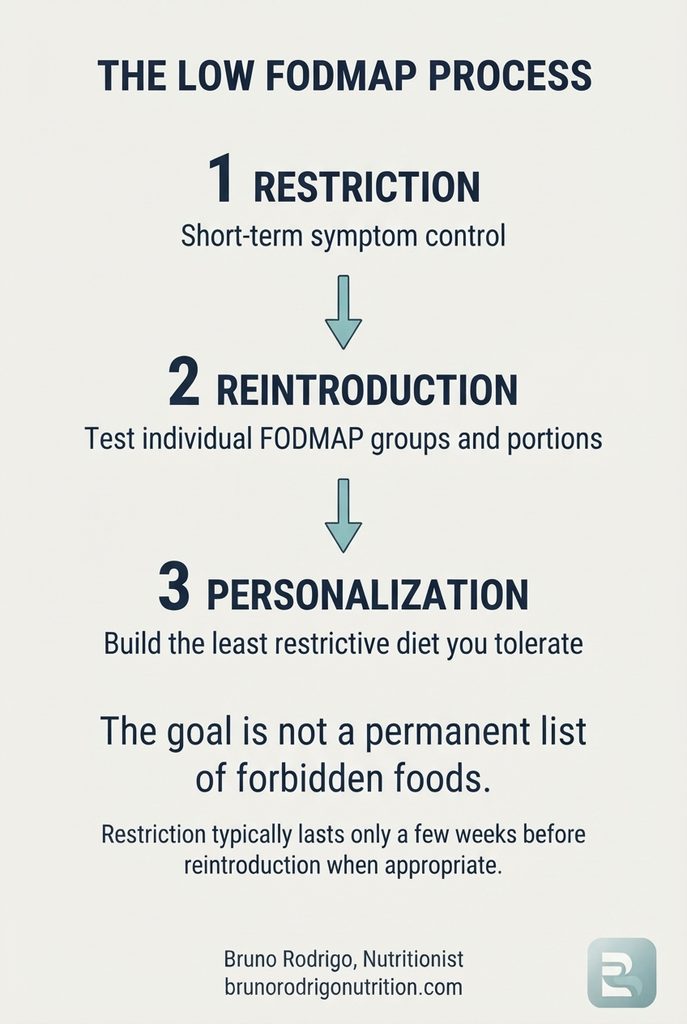
    The low FODMAP diet is a temporary dietary strategy used mainly to manage symptoms of irritable bowel syndrome (IBS). It reduces certain fermentable carbohydrates for a short period, then systematically reintroduces them to identify individual triggers and tolerances.

    The diet has three phases: restriction, reintroduction and personalization. The restrictive phase usually lasts only a few weeks — Monash University recommends about 2–6 weeks — and is not intended to become a permanent way of eating.

    Research supports the low FODMAP diet as one of the best-studied dietary interventions for IBS, but it does not work for everyone and unnecessary long-term restriction may reduce diet variety.

    Key Takeaways

    • The strongest evidence for the low FODMAP diet is for IBS.
    • It is a 3-phase process, not a permanent elimination diet.
    • Restriction is temporary and is followed by reintroduction.
    • Food classification often depends on serving size.
    • The goal is the least restrictive personalized diet that controls symptoms.
    • Not everyone with digestive symptoms should start a low FODMAP diet.
    • Current laboratory-tested food information should be checked using resources such as the Monash FODMAP App.
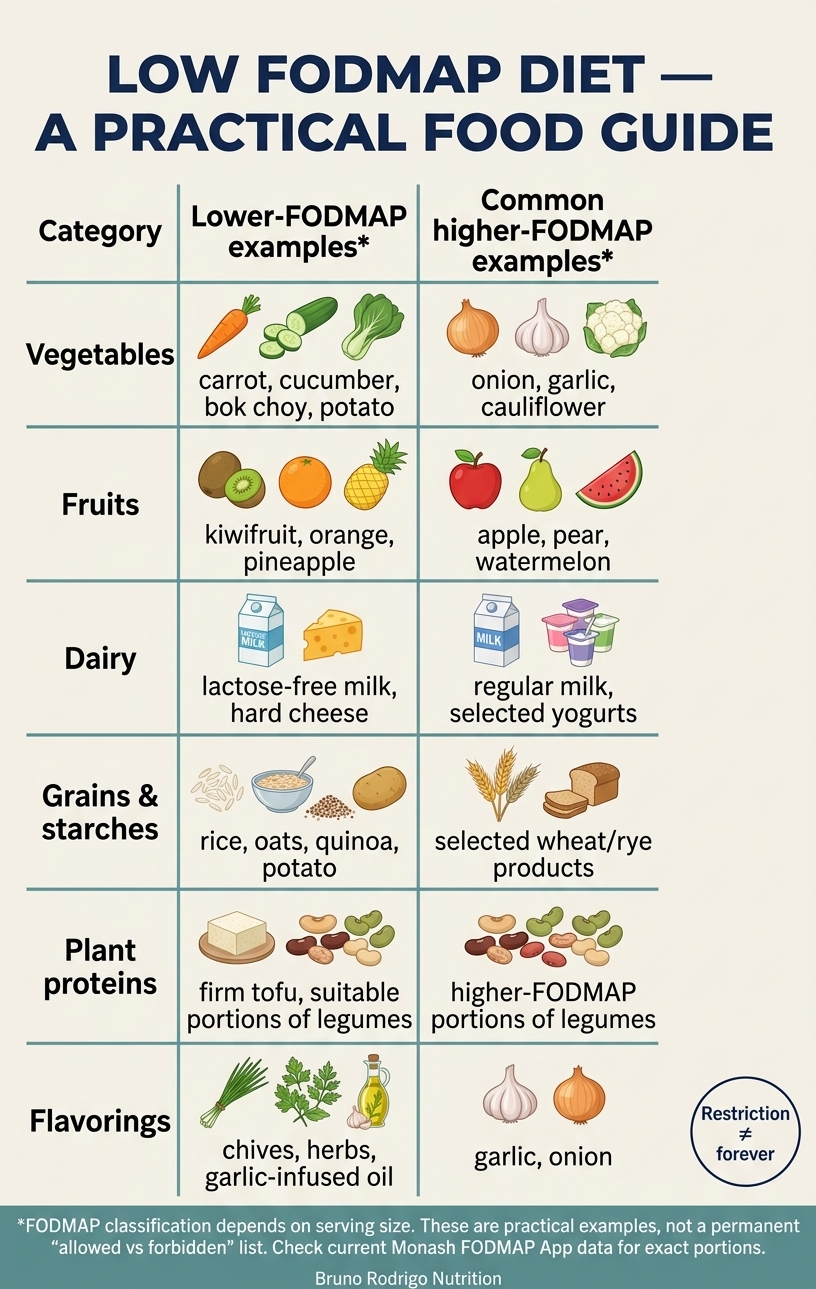
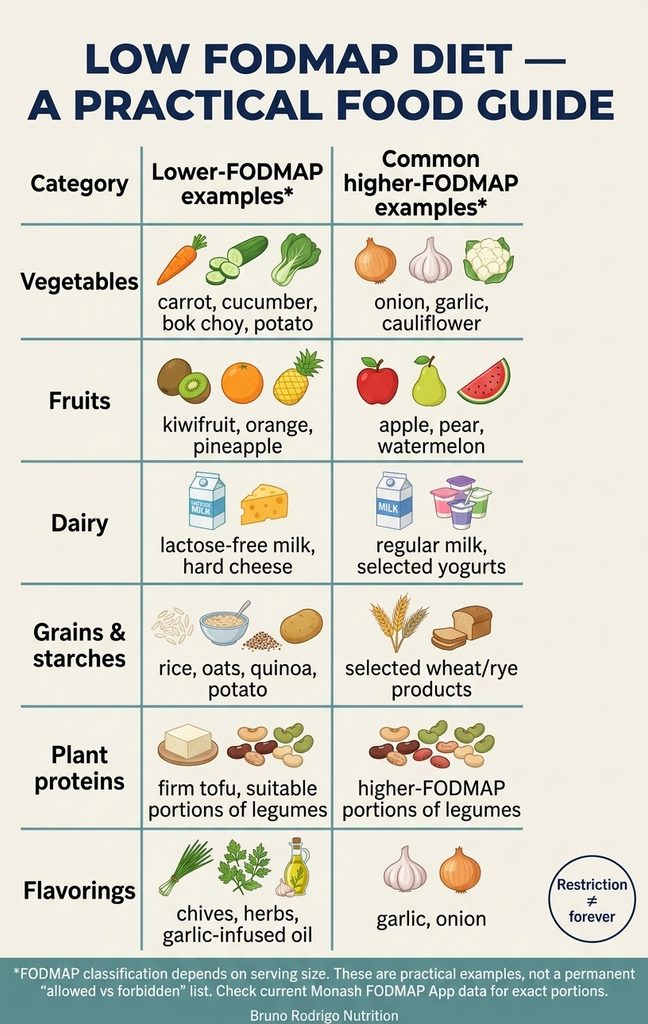
    low-fodmap-diet-food-guide

    What Is the Low FODMAP Diet?

    The low FODMAP diet is a structured dietary approach designed primarily to reduce gastrointestinal symptoms in people with irritable bowel syndrome (IBS).

    FODMAPs are short-chain carbohydrates that are either poorly absorbed or not fully digested in the small intestine. They can draw water into the intestine and are then fermented by gut bacteria, producing gas. These processes occur to some extent in everyone, but people with IBS may be more sensitive to the resulting intestinal distension, contributing to symptoms such as bloating, abdominal pain, excess gas and altered bowel habits. [1]

    Importantly, the low FODMAP diet is not based on the idea that FODMAP-containing foods are unhealthy. Many high-FODMAP foods are nutritious. The strategy temporarily reduces selected fermentable carbohydrates to test whether symptoms improve, then systematically reintroduces them to identify individual tolerance.

    What does FODMAP stand for?

    FODMAP stands for:

    • Fermentable
    • Oligosaccharides — mainly fructans and galacto-oligosaccharides (GOS)
    • Disaccharides — mainly lactose
    • Monosaccharides — mainly excess fructose
    • And
    • Polyols — including sorbitol and mannitol

    These carbohydrates occur naturally in a wide range of foods, including fruits, vegetables, grains, legumes and dairy products, as well as in some food additives and sweeteners. [2]

    Why can FODMAPs trigger symptoms?

    FODMAPs can increase the amount of water and gas inside the intestine. In someone with visceral hypersensitivity — a common feature of IBS — the stretching created by this additional fluid and gas can be experienced as pain, pressure, bloating or urgency.

    This distinction matters: FODMAPs do not cause IBS, and most people can eat high-FODMAP foods without difficulty. The same physiological fermentation can produce very different symptoms depending on intestinal sensitivity, motility and individual tolerance. [1]

    That is also why the goal of the diet is not to permanently remove every fermentable carbohydrate. It is to discover which FODMAPs — and which amounts — matter for the individual.


    Who Is the Low FODMAP Diet For?

    The strongest evidence is for IBS

    The strongest evidence for the low FODMAP diet is in people with diagnosed irritable bowel syndrome.

    The American Gastroenterological Association describes it as the dietary intervention with the strongest evidence base for IBS, while emphasizing that it should be used as a time-limited process consisting of restriction, reintroduction and personalization. [3]

    It may be particularly reasonable to consider when symptoms such as abdominal pain, bloating, gas or altered bowel habits appear to be related to meals.

    However, IBS is not diagnosed simply because someone feels bloated after eating. Persistent gastrointestinal symptoms should be assessed in context rather than assuming that FODMAPs are automatically the cause.

    What about bloating without IBS?

    Bloating is one of the symptoms that often improves during a low FODMAP intervention in people with IBS. A recent network meta-analysis found improvement in abdominal bloating or distension compared with a habitual diet. [4]

    But bloating alone is not a diagnosis.

    Constipation, lactose intolerance, celiac disease, disorders of gut-brain interaction, altered motility and other gastrointestinal conditions can all contribute to bloating. For that reason, a low FODMAP diet should not be presented as a universal “anti-bloating diet.”

    A more accurate approach is:

    If bloating is persistent or significant, identify the clinical context first. Then decide whether a structured low FODMAP trial is appropriate.

    This distinction lets us target the low fodmap diet for bloating query without making the bad SEO-medical shortcut:

    bloating = low FODMAP.


    What about SIBO?

    Small intestinal bacterial overgrowth — SIBO — is a different condition from IBS, although symptoms can overlap and some people may have both.

    A low FODMAP diet may reduce fermentable substrate and help control gastrointestinal symptoms in some people with SIBO, but the evidence is substantially less established than it is for IBS. Current reviews describe dietary strategies as a possible component of management rather than evidence that low FODMAP restriction by itself reliably eliminates bacterial overgrowth. [5]

    Therefore, I would not describe the low FODMAP diet as a primary treatment or cure for SIBO.

    If SIBO is suspected or diagnosed, the underlying cause, diagnostic uncertainty and appropriate medical treatment also need to be considered.

    This gives us a scientifically defensible answer to a query that is full of overclaims online.


    Who should be cautious with a restrictive low FODMAP diet?

    A restrictive diet is not appropriate for everyone.

    The AGA identifies poor candidates for restrictive dietary interventions as people at risk of malnutrition, people with limited food access, people already eating very few potential trigger foods, and those with an eating disorder or uncontrolled psychiatric disorder. Screening for disordered eating is particularly important before starting a restrictive diet. [3]

    Professional guidance becomes particularly valuable when the diet is already limited, nutritional adequacy is uncertain, symptoms are severe or the person is becoming increasingly afraid of eating.


    Does the Low FODMAP Diet Work?

    Yes, the low FODMAP diet can improve IBS symptoms in many people — but it does not work for everyone, and the strongest evidence relates to short-term symptom management.

    A 2026 umbrella review pooled evidence from 16 meta-analyses involving 141 studies and 9,904 people with IBS. Overall, low FODMAP interventions reduced IBS symptom severity and improved quality of life. However, statistically significant benefits were not demonstrated for every individual outcome, including abdominal pain, stool consistency and stool frequency, and the authors highlighted methodological limitations inherent to dietary trials. [6]

    A 2025 systematic review and network meta-analysis similarly concluded that the largest amount of evidence among dietary interventions for IBS currently exists for the low FODMAP diet, while noting that certainty for many comparisons remains low or very low. [4]

    A large 2024 randomized trial — CARIBS — compared a low-FODMAP diet combined with traditional IBS dietary advice, a low-carbohydrate diet and optimized medical therapy. After four weeks, 76% of participants in the low-FODMAP-plus-traditional-advice group met the study’s symptom-response criterion, compared with 58% receiving optimized medical therapy. This was a single-center trial and the intervention combined low FODMAP with traditional dietary advice, so it should not be interpreted as proof that low FODMAP is universally superior to medication. [7]

    What the evidence actually tells us

    Evidence sourceWhat it tells usImportant limitation
    Clinical guidelinesLow FODMAP is a recognized dietary option for IBSIt should be a time-limited trial, not permanent restriction
    Randomized trialsClinically meaningful symptom improvement is possibleResponse varies between individuals
    Meta-analysesOverall IBS symptom severity tends to improveCertainty varies by outcome and comparator
    Bloating studiesBloating/distension may improve, particularly within IBSBloating has many causes outside IBS
    Long-term evidencePersonalized diets can remain effective after reintroductionEvidence is less extensive than for initial restriction
    Reintroduction studiesPeople respond differently to individual FODMAP groupsThere is no single universal trigger profile

    The practical conclusion is therefore not:

    “Low FODMAP works.”

    It is:

    “Low FODMAP is one of the best-studied dietary strategies for IBS, but response is individual and should be evaluated rather than assumed.”


    How the Low FODMAP Diet Works: The 3 Phases

    The low FODMAP diet is intended as a three-phase process rather than permanent restriction.

    One of the most common misunderstandings about the low FODMAP diet is treating the restrictive phase as the entire diet.

    It is actually a three-step process:

    Restriction → Reintroduction → Personalization

    Monash University describes Step 1 as approximately 2–6 weeks, Step 2 as roughly 8–12 weeks, and Step 3 as the long-term personalized diet. The AGA similarly advises that the restrictive phase should last no longer than about 4–6 weeks. [8]

    Phase 1 — Restriction

    During the first phase, higher-FODMAP foods are swapped for lower-FODMAP alternatives.

    The aim is not to eliminate every molecule of every FODMAP. It is to reduce overall exposure enough to determine whether symptoms improve.

    Monash recommends using this phase for approximately 2–6 weeks. [8]

    If symptoms improve meaningfully, that creates a reason to move forward.

    If they do not, extending restriction indefinitely is generally not the logical next step.


    Phase 2 — Reintroduction

    Reintroduction is where the diet begins to answer the more important question:

    Which FODMAPs actually matter for me?

    The background diet remains relatively low FODMAP while individual FODMAP groups are systematically challenged.

    Monash’s current 3-step guidance describes an 8–12 week reintroduction phase and separates challenges for fructose, lactose, sorbitol, mannitol, fructans and GOS. [8]

    Responses differ substantially between individuals, which is exactly why staying permanently in Step 1 throws away some of the most useful information the diet can provide.

    Read More: FODMAP Reintroduction: How to Personalize Your Diet After the Elimination Phase


    Phase 3 — Personalization

    The third phase is the long-term diet.

    Foods and FODMAP groups that are well tolerated are brought back. Foods that consistently trigger symptoms may be limited by type, portion or frequency, depending on individual tolerance.

    Monash explicitly describes personalization as the long-term goal and continues to update its tools to help users tailor food guidance based on reintroduction results. [9]

    The goal is not maximum restriction. It is maximum dietary variety compatible with symptom control.

    That is the idea I would visually highlight in the article.


    Low FODMAP Diet Plan: How to Start

    Step 1 — Confirm that a low FODMAP approach makes sense

    Before restricting foods, consider the symptom pattern and clinical context.

    The strongest indication is IBS. Persistent or unexplained gastrointestinal symptoms should not simply be self-diagnosed as “FODMAP intolerance.”

    If there are warning signs or significant diagnostic uncertainty, investigation comes before restriction.


    Step 2 — Define a short testing period

    Do not begin with:

    “I’m going low FODMAP from now on.”

    Begin with:

    “I am testing whether reducing FODMAPs improves my symptoms.”

    Set a review point within the recommended short restriction window.

    Monash uses approximately 2–6 weeks; AGA guidance says the restriction phase should last no more than about 4–6 weeks. [8]


    Step 3 — Identify your main high-FODMAP exposures

    You usually do not need to rebuild your entire diet.

    Start by identifying where the largest FODMAP exposures are coming from:

    onion and garlic, certain fruits, lactose-containing foods, wheat-based foods, legumes, selected vegetables, polyol sweeteners or combinations of these.

    The goal is targeted substitution, not removing as much food as possible.


    Step 4 — Build meals from foods you already eat

    The easiest low FODMAP diet plan is usually the one that still resembles your normal diet.

    Instead of designing a completely foreign menu, keep familiar meal structures and replace the ingredients that contribute the most FODMAPs.

    That improves practicality and makes it easier to understand whether FODMAP reduction — rather than an entirely different eating pattern — actually influenced symptoms.


    Step 5 — Check portions, not just food names

    A food may have:

    a low-FODMAP serving

    and

    a higher-FODMAP serving

    at the same time.

    That is not contradictory.

    The classification is serving-size specific.

    Use current laboratory-tested data such as the Monash University FODMAP Diet App rather than treating old food lists as permanent rules. Monash continues to retest foods and update its database. [10]


    Step 6 — Track symptoms without turning food into a full-time project

    Track enough information to identify a meaningful change:

    • abdominal pain;
    • bloating/distension;
    • bowel pattern;
    • urgency if relevant;
    • overall symptom severity.

    You do not need to calculate every gram of FODMAP in every meal.

    The purpose of tracking is to answer:

    “Am I meaningfully better during this intervention?”

    not:

    “Can I collect the maximum possible amount of food data?”


    Step 7 — Decide in advance what happens next

    Before beginning restriction, set a review point.

    If symptoms improve meaningfully:

    move to reintroduction.

    If they do not:

    reassess rather than automatically restricting more foods.

    That one decision helps prevent a two-week experiment from silently turning into a two-year elimination diet.


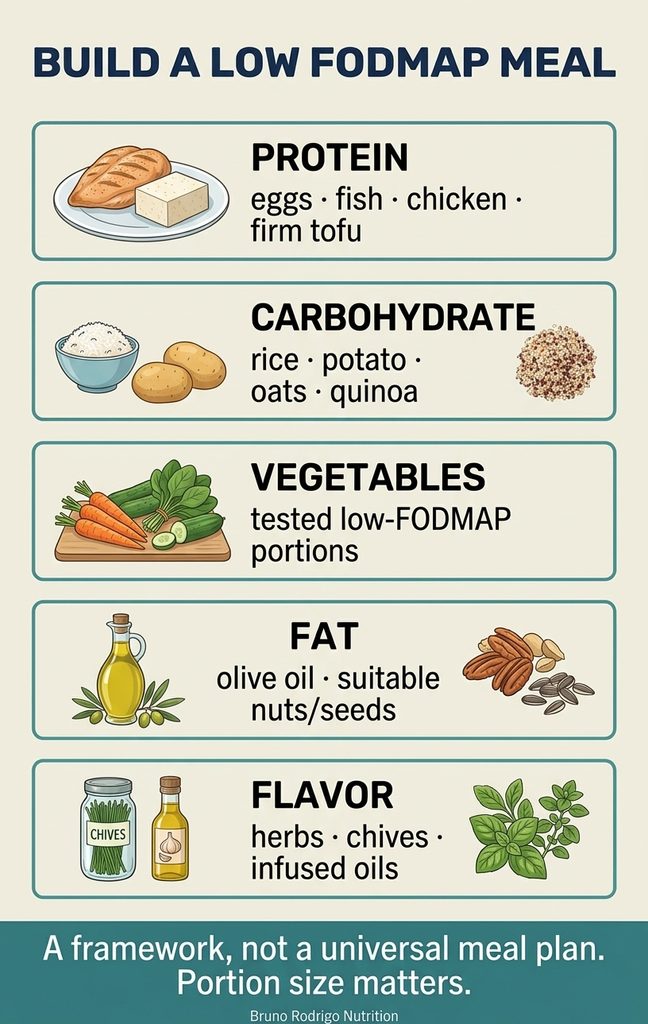
    Building a Low FODMAP Meal

    Low FODMAP meal-building framework with protein, carbohydrate, vegetables, fruit, fats and flavor options.

    A useful meal framework is more practical than a rigid seven-day menu.

    Meal componentExamples that can fit a low FODMAP meal
    ProteinEggs, plain fish, chicken, lean meat, firm tofu
    CarbohydrateRice, potato, oats, quinoa
    VegetableChoose from current tested portions — see Low FODMAP Vegetables
    FruitCurrent tested low-FODMAP fruit servings
    Calcium-rich foodLactose-free dairy or appropriate low-lactose alternatives
    FatOlive oil, suitable nuts and seeds
    FlavorHerbs, chives, green onion tops, garlic-infused oil

    Plain meat, fish and eggs contain little or no carbohydrate and therefore are not significant natural FODMAP sources, but marinades, sauces, onion, garlic and other added ingredients can change the final meal.

    Food-specific low FODMAP status depends on serving size. Check current Monash FODMAP App data when portions matter.


    What Foods Are High and Low FODMAP?

    FODMAP is not one substance. Different foods contain different fermentable carbohydrates.

    This table provides examples, not a definitive food list.

    FODMAP typeCommon higher-FODMAP sourcesLower-FODMAP alternatives/examples
    FructansGarlic, onion, leek, many wheat/rye foodsChives, green onion tops, garlic-infused oil, rice or quinoa-based staples
    GOSMany legumes/pulses, cashews, pistachiosFirm tofu, peanuts, macadamias; some legumes at tested portions
    LactoseRegular milk, many yogurts, some soft dairy foodsLactose-free milk, suitable lactose-free yogurt, many hard cheeses
    Excess fructoseHoney, apples, pears, mangoKiwifruit, oranges, pineapple and other tested alternatives
    SorbitolSelected fruits including some stone fruitsFruit choices with lower tested sorbitol loads
    MannitolSome mushrooms and vegetablesCarrot, potato, eggplant and appropriate tested alternatives

    Monash emphasizes that the FODMAP content of individual foods and portions should be checked using current data rather than relying on a simplified static list. [2]

    Looking specifically for vegetables? → Read: Low FODMAP Vegetables: What to Eat, Portions, Swaps and Common Mistakes.


    Why Portion Size Matters

    One of the most useful concepts in the low FODMAP diet is also one of the most frequently missed:

    A food’s FODMAP rating is serving-size specific.

    A food does not necessarily have one permanent classification.

    A practical way to think about it is:

    food + serving size = current FODMAP rating

    The Monash App therefore gives traffic-light ratings at different amounts. Its “green” thresholds are also deliberately conservative so that people can generally combine more than one low-FODMAP serving within a mixed meal. [11]

    This is why “safe food” and “forbidden food” are often poor ways to describe the diet.

    A better question is:

    How much of this food is currently considered low FODMAP, and how much do I personally tolerate?


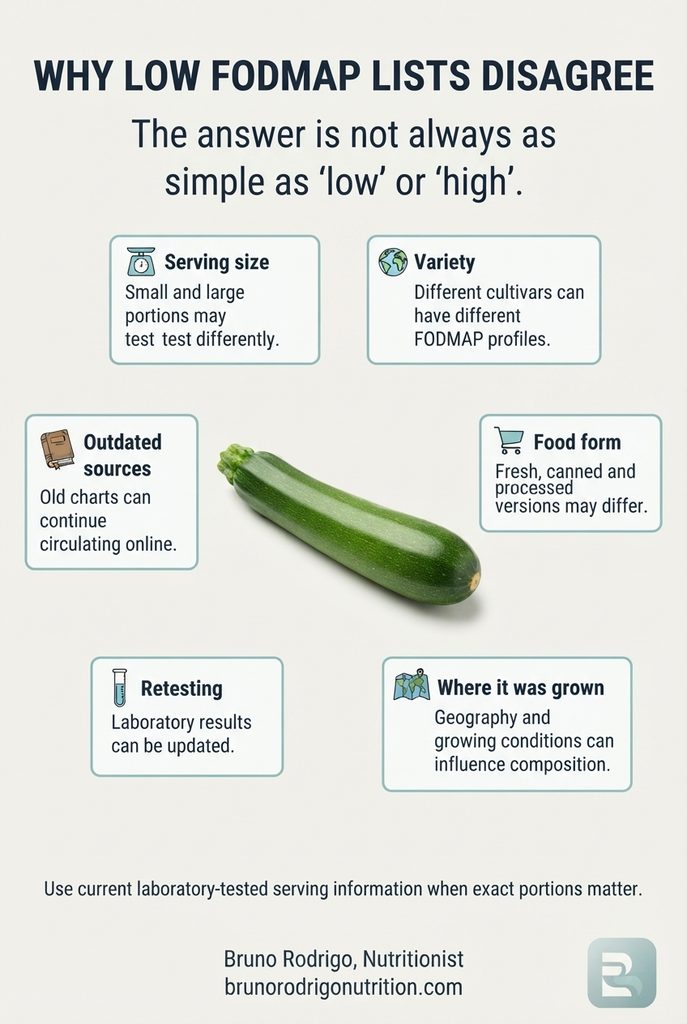
    Why FODMAP Food Lists Can Change

    Two reputable FODMAP resources can sometimes appear to disagree.

    That does not necessarily mean one is wrong.

    FODMAP content can vary because of:

    • serving size;
    • plant variety or cultivar;
    • growing conditions;
    • geographical origin;
    • food processing;
    • different batches;
    • laboratory retesting;
    • older sources continuing to circulate online.

    Monash’s laboratory team has explicitly reported meaningful differences when foods are retested and updated its reintroduction recommendations based on newer results. The researchers note that variation in agricultural foods is expected and does not mean earlier tests were fraudulent or useless — they reflected the samples tested at that time. [10]

    That gives us the sentence I manteria em box:

    Serving sizes and classifications may change as foods are retested. Use this guide for practical orientation and consult the current Monash FODMAP App for the latest laboratory-tested serving information.


    Common Low FODMAP Diet Mistakes

    Staying in restriction for too long

    Step 1 is temporary. If symptoms improve, the next step is reintroduction — not indefinite restriction. [12]

    Treating high-FODMAP foods as unhealthy

    High-FODMAP foods are not inherently unhealthy. Many are nutrient-dense foods that may be perfectly well tolerated in personalization.

    Confusing gluten with FODMAPs

    Gluten is a protein. FODMAPs are carbohydrates. Wheat may create confusion because it contains both gluten and fructans, but gluten-free and low FODMAP are not interchangeable concepts.

    Using an old static food list

    Laboratory results can change as foods are retested. Static PDFs and old blog charts should not override current tested data. [10]

    Ignoring serving size

    Low FODMAP does not automatically mean unlimited.

    Removing foods instead of replacing them

    Restriction without appropriate substitutions can reduce variety and nutritional adequacy. The practical strategy should usually be swap, not simply remove.

    Starting without a reintroduction plan

    If there is no defined path out of restriction, Step 1 can easily become the permanent diet.

    Assuming every digestive symptom is caused by FODMAPs

    Food is only one part of gastrointestinal symptom management. Constipation, motility, visceral hypersensitivity, stress, other dietary factors and medical conditions may also matter.

    Micromanaging FODMAP stacking unnecessarily

    FODMAP loads can add up in a meal, but Monash intentionally uses conservative green thresholds. If symptoms are already well controlled, there is no reason to turn each meal into a complex FODMAP calculation. [11]


    Risks and Limitations of the Low FODMAP Diet

    The low FODMAP diet is evidence-based, but that does not make it risk-free or appropriate for indefinite self-directed restriction.

    Nutritional adequacy

    Highly restrictive implementation can reduce dietary variety.

    Studies summarized in the 2025 Seoul IBS consensus reported lower intake of some nutrients, including calcium, iron and magnesium, in some low FODMAP interventions. [13]

    This is one reason the personalization phase matters.

    Fiber and food variety

    Removing whole categories of fruits, vegetables, grains and legumes without thoughtful substitutions can unintentionally reduce fiber intake and diet quality.

    The appropriate response is not necessarily supplementation or even more restriction — it is often better food substitution and broader reintroduction.

    Gut microbiota

    Some studies of the restrictive phase have reported lower abundance of Bifidobacteria during low FODMAP intake. The long-term clinical significance remains uncertain, particularly because most trials have focused on the restriction phase rather than the full restriction → reintroduction → personalization process. [13]

    So I would not write:

    “Low FODMAP damages your microbiome.”

    I would write:

    Short-term FODMAP restriction can change the gut microbiota, which is another reason unnecessary long-term restriction should be avoided.

    Food-related anxiety and disordered eating

    Restrictive diets can be particularly problematic for someone with an eating disorder or significant food-related anxiety.

    AGA guidance recommends screening for disordered eating before restrictive dietary interventions, and a 2024 Lancet Gastroenterology & Hepatology review highlights eating-disorder risk, food cost, complexity and food-related quality of life as important considerations when using whole-diet interventions for IBS. [3]

    Complexity and cost

    Following a low FODMAP diet can require label reading, meal planning, recipe modification and access to alternative foods.

    A strategy that works biologically but cannot be implemented realistically is not a good long-term nutrition strategy.

    The evidence is stronger for the initial phase than for long-term restriction

    Most randomized trials have studied the restrictive phase.

    That means we know substantially more about short-term symptom response than we do about remaining highly restricted for long periods — which is another reason not to confuse the intervention phase with the long-term diet. [13]


    What If the Low FODMAP Diet Does Not Work?

    Not responding to a properly implemented low FODMAP trial is useful information.

    It suggests that continuing to eliminate more foods may not be the best strategy.

    The AGA recommends trying dietary interventions for a predefined period and moving to another treatment approach if there is no clinical response. [3]

    Possible next questions include:

    • Was IBS the correct working diagnosis?
    • Was the diet implemented sufficiently to test the hypothesis?
    • Could constipation or another gastrointestinal mechanism be driving symptoms?
    • Are meal size, fiber intake, caffeine, alcohol or other dietary factors more relevant?
    • Are non-diet treatments worth considering?

    The answer should not automatically be:

    “Restrict more.”

    A failed dietary trial can prevent months of unnecessary dietary restriction if it is interpreted correctly.


    What Happens After the Restriction Phase?

    If symptoms improve during Step 1, restriction has done its job.

    The next objective is not to protect the low FODMAP diet from contamination.

    It is to challenge it.

    During reintroduction, individual FODMAP groups are systematically tested while symptoms are monitored. The results then inform a more flexible personalized eating pattern. [14]

    The long-term question changes from:

    “Which foods are high FODMAP?”

    to:

    “Which FODMAPs do I react to, at which amounts, and which foods can I comfortably bring back?”

    That is the transition from generic restriction to individualized nutrition.

    Next → FODMAP Reintroduction: How to Personalize Your Diet After the Elimination Phase

    Esse é exatamente o lugar em que eu colocaria a ponte forte para Article #3.


    When to Get Professional Help

    Professional evaluation is especially appropriate when gastrointestinal symptoms are persistent, severe, unexplained or accompanied by warning signs.

    Anemia, rectal bleeding or bloody stools, unexplained weight loss and certain family histories can suggest conditions other than IBS and warrant medical evaluation rather than simply starting a restrictive diet. [15]

    Dietitian support is particularly useful when:

    • the diet is already highly restricted;
    • maintaining adequate nutrition is difficult;
    • symptoms do not respond as expected;
    • reintroduction feels confusing;
    • food-related anxiety is increasing;
    • multiple medical or dietary conditions overlap.

    The purpose of professional guidance should not be to create the strictest possible diet.

    It should be to obtain useful information while preserving as much dietary variety as possible.

    Frequently Asked Questions

    How long should you follow a low FODMAP diet?

    The strict low FODMAP phase is temporary. Monash University recommends approximately 2–6 weeks, while the American Gastroenterological Association advises that restriction should last no more than about 4–6 weeks. If symptoms improve, the next step is systematic reintroduction rather than continuing strict restriction indefinitely. [8]

    Is the low FODMAP diet only for IBS?

    The strongest evidence for the low FODMAP diet is for irritable bowel syndrome (IBS). It has been studied in some other gastrointestinal conditions, but the evidence is less established and it should not be assumed to be appropriate for every person with digestive symptoms. [3]

    What can you eat on a low FODMAP diet?

    A low FODMAP diet can include foods from all major food groups, such as suitable portions of rice, potatoes, oats, quinoa, eggs, meat, fish, firm tofu, lactose-free dairy products, fruits and vegetables. The important detail is that many FODMAP ratings depend on serving size, so current laboratory-tested information should be used for specific foods and portions. [2]

    Is low FODMAP the same as gluten-free?

    No. Gluten is a protein, while FODMAPs are fermentable carbohydrates. Wheat contains gluten but is also a major source of fructans, which explains some of the overlap between the two diets. A gluten-free product is therefore not automatically low FODMAP, and a low FODMAP diet does not require avoiding gluten unless there is another clinical reason to do so.

    Can you follow a low FODMAP diet long term?

    A strict low FODMAP diet is not intended for long-term use. The long-term phase is personalized: foods and FODMAPs that are tolerated are reintroduced, while only relevant triggers remain limited. This increases food variety and may improve nutritional adequacy and quality of life. [9]

    What happens if the low FODMAP diet does not improve symptoms?

    If symptoms do not meaningfully improve during an appropriately conducted short trial, continuing to restrict more foods indefinitely is usually not the best next step. The diet should be reassessed, and other dietary, gastrointestinal or medical explanations and treatments should be considered. [3]

    Is the low FODMAP diet good for bloating?

    It can reduce bloating and abdominal distension in some people with IBS, and evidence supports improvement in this symptom within IBS populations. However, bloating has many possible causes, so a low FODMAP diet should not be treated as a universal treatment for anyone who experiences bloating.

    The Bottom Line

    The low FODMAP diet is best understood as a structured experiment, not a permanent elimination diet.

    Reduce FODMAP exposure temporarily, evaluate whether symptoms improve, systematically reintroduce FODMAP groups, and build the least restrictive diet that controls your symptoms.

    Restriction → Reintroduction → Personalization

    If persistent digestive symptoms are making your diet increasingly restrictive, individualized nutrition guidance can help separate necessary restriction from foods you may be able to tolerate.

    References

    [1] https://www.monashfodmap.com/ibs-central-android/about-fodmap-and-ibs-android/
    [2] https://www.monashfodmap.com/about-fodmap-and-ibs/high-and-low-fodmap-foods/
    [3] https://pubmed.ncbi.nlm.nih.gov/35337654/
    [4] https://pubmed.ncbi.nlm.nih.gov/40258374/
    [5] https://pubmed.ncbi.nlm.nih.gov/39968993/
    [6] https://pubmed.ncbi.nlm.nih.gov/41550863/
    [7] https://pubmed.ncbi.nlm.nih.gov/38643782/
    [8] https://monashfodmap.com/documents/192/3-step_FODMAP_Diet_2025_A4_info_sheet.pdf
    [9] https://www.monashfodmap.com/blog/step-3-personalisation-why-is-it-important/
    [10] https://monashfodmap.com/blog/reintroduction-update/
    [11] https://www.monashfodmap.com/blog/fodmap-stacking-explained/
    [12] https://www.monashfodmap.com/about-fodmap-and-ibs/frequently-asked-questions/
    [13] https://pmc.ncbi.nlm.nih.gov/articles/PMC11986658/
    [14] https://monashfodmap.com/blog/order-of-fodmap-reintroduction/
    [15] https://www.niddk.nih.gov/health-information/digestive-diseases/irritable-bowel-syndrome/diagnosis

  • Low FODMAP Vegetables: What to Eat, Portions, Swaps and Common Mistakes

    Low FODMAP Vegetables: What to Eat, Portions, Swaps and Common Mistakes

    Low FODMAP vegetables are vegetables that contain relatively small amounts of fermentable carbohydrates at a specific serving size. Common options include carrots, potatoes, cucumber, eggplant, green beans, bok choy, leafy greens and other vegetables listed below.

    But there is an important catch: “low FODMAP” is not always a permanent yes-or-no label. Portion size matters. A vegetable that is low FODMAP at one serving may contain moderate or high amounts at a larger serving, and laboratory testing can change over time.

    Monash University therefore recommends using its FODMAP Diet App for the most current food and serving-size information. Monash also retests foods as varieties, growing conditions and food composition change. [1]

    Practical rule: use lists like this one as a starting point, not as a permanent list of foods you are “allowed” or “forbidden” to eat.

    Low FODMAP Vegetables — Quick Guide

    Quick-reference: low FODMAP vegetable choices

    A 2025 Monash University shopping guide lists the following examples as low FODMAP at one standard 75 g (2.65 oz) serving. That standard serving is a useful orientation point — not necessarily the maximum amount that remains low FODMAP for every food. Check the current Monash App for food-specific thresholds. [2]

    TypePractical low FODMAP examples
    Leafy vegetablesLettuce, spinach, bok choy, red or white cabbage, collard greens, kale
    Roots and tubersCarrot, parsnip, potato, sweet potato, radish, yam
    PodsSnow peas, green beans
    Vegetables with seedsEggplant, green bell pepper, cucumber, kabocha pumpkin
    Processed vegetablesPickled beetroot, canned tomato
    Flower vegetablesBroccoli head
    SeedsCorn kernels
    MushroomsOyster mushrooms

    Important: serving sizes and classifications may change as foods are retested. Use this guide for practical orientation and consult the current Monash University FODMAP Diet App for the latest laboratory-tested serving information. Monash specifically notes that agricultural practices, geography, environmental conditions and different cultivars can affect FODMAP content. [3]


    What Makes a Vegetable Low FODMAP?

    FODMAP stands for fermentable oligosaccharides, disaccharides, monosaccharides and polyols. These are short-chain carbohydrates that can be poorly absorbed in the small intestine and can contribute to symptoms such as bloating, abdominal pain, gas, diarrhea or constipation in some people with irritable bowel syndrome (IBS).

    You cannot reliably determine the FODMAP content of a vegetable simply by looking at it or comparing it with similar foods. Laboratory analysis is needed, which is why resources such as the Monash University FODMAP Diet App use tested foods and serving-specific traffic-light ratings. [4]

    The American College of Gastroenterology recommends a limited trial of a low FODMAP diet for people with IBS to improve global symptoms. It is not intended to become an indefinite restriction diet. [5]


    Low FODMAP Vegetables: A Practical List

    Leafy greens

    Leafy vegetables can make it much easier to maintain variety during the restrictive phase.

    Examples included in Monash’s low FODMAP shopping list include:

    • lettuce;
    • spinach;
    • bok choy;
    • kale;
    • collard greens;
    • red cabbage;
    • white cabbage.

    These are useful because they can provide volume, texture, micronutrients and fiber without turning every meal into a list of special “diet foods.” [6]

    The important point is still portion and individual tolerance, rather than assuming that the same amount works for everyone.


    Root vegetables and tubers

    Common options include:

    • carrots;
    • potatoes;
    • parsnips;
    • radishes;
    • yams;
    • sweet potatoes.

    Carrots and potatoes are also included on Monash’s general list of low FODMAP alternatives. [7]

    Some foods in this group illustrate why portion size matters particularly well. A food can have a low-FODMAP serving and then contain enough of a specific FODMAP to receive a different rating at larger amounts.

    That does not make the food “bad.” It makes dose part of the classification.


    Cruciferous vegetables

    Cruciferous vegetables are a good example of why family names are not enough to predict FODMAP content.

    Monash’s 2025 guide lists broccoli head as a low-FODMAP option at its standard serving, while cauliflower appears among the high-FODMAP vegetables in Monash’s general sample food list. [8]

    So a rule such as:

    “cruciferous vegetables are high FODMAP”

    would be too simplistic.

    Different vegetables — and sometimes different portions or parts of the same vegetable — can behave differently.


    Squash and gourds

    Kabocha pumpkin appears in Monash’s low-FODMAP shopping list. Zucchini also appears in Monash materials as a low-FODMAP alternative, although the serving size should be checked in the current app. [8]

    This is another reason not to use broad rules such as “all squash is low FODMAP.”

    Check the specific variety and serving.


    Tomatoes, peppers and other fruiting vegetables

    Useful options can include:

    • cucumber;
    • eggplant;
    • green bell pepper;
    • some tomato preparations and portions.

    Notice the wording: some.

    Monash’s 2025 shopping guide lists canned tomato at its standard low-FODMAP serving, while tomato type and serving size should still be checked individually in the app. Green bell pepper is listed as a low-FODMAP alternative in Monash resources. [8]

    This category is a good illustration of why copying an old chart without specifying the variety or serving can lead to contradictory advice.


    Beans, pods and sprouts

    Green beans and snow peas appear among Monash’s low-FODMAP examples. Other legumes and pulses can be more complicated because their FODMAP content depends on the food, serving size and sometimes preparation or processing. [8]

    So:

    “Beans are high FODMAP”

    is too broad.

    And so is:

    “Beans are low FODMAP.”

    The specific food and amount matter.


    Alliums and flavor alternatives

    Onion and garlic are among the most common high-FODMAP vegetables because they contain fructans.

    Fortunately, reducing onion and garlic does not mean food has to become flavorless.

    Practical alternatives include:

    • chives;
    • green onion tops;
    • herbs and spices;
    • garlic-infused oil;
    • onion-infused oil.

    Garlic- and onion-infused oils can work because fructans are water-soluble but not fat-soluble. The flavor compounds can move into the oil without the same transfer of fructans that occurs into water-based preparations. [9]

    This is usually much more practical than asking someone to eat bland food for weeks.


    Mushrooms

    “Mushrooms” should not be treated as one single FODMAP category.

    Monash’s general food list places mushrooms among common higher-FODMAP vegetables, while its more specific 2025 shopping guide lists oyster mushrooms as a low-FODMAP option at the standard serving. [10]

    That difference is exactly why the species matters.

    12 Low FODMAP Vegetables

    Portion Size Matters More Than Most Lists Suggest

    One of the biggest problems with online low FODMAP lists is that they often reduce the decision to:

    food = low

    or

    food = high

    A better model is:

    food + amount = FODMAP classification

    The Monash App uses different traffic-light ratings at different serving sizes because the total FODMAP load can increase as the amount eaten increases. Monash deliberately sets its green thresholds conservatively so that people can generally combine several green servings in a normal meal. [11]

    That means two statements can both be true:

    “This vegetable has a low-FODMAP serving.”

    and:

    “A larger amount of the same vegetable may not remain low FODMAP.”

    This is why a serving size is more useful than a simple allowed/forbidden list.


    Why Low FODMAP Vegetable Lists Sometimes Disagree

    If one website says a vegetable is low FODMAP and another says it is not, that does not automatically mean one of them is lying or incompetent.

    There are several legitimate reasons lists can differ.

    Why lists disagreeWhat it can change
    Serving sizeA small serving may be low while a larger serving is moderate or high
    Vegetable varietyDifferent cultivars may have different carbohydrate profiles
    Fresh vs canned or processedProcessing can change the composition of the food
    Country of originProduce grown in different locations may test differently
    Agricultural conditionsClimate, soil and growing conditions can influence plant composition
    RetestingNew laboratory analysis can update older classifications
    Old sourcesStatic charts may continue circulating after the underlying data change

    Monash has specifically reported meaningful variation in fresh produce between countries and over time. This has led its researchers to move away from permanently describing foods as “FODMAP free.” [12]

    This is also why an article like this should not try to replace the Monash App.

    The article explains how to make sense of the information.

    The app provides the evolving laboratory data.

    Why Low FODMAP Lists Disagree

    Popular Vegetables People Ask About

    Are tomatoes low FODMAP?

    Some tomato types and servings can fit a low FODMAP diet, but tomato should not be treated as one universal entry.

    Monash’s 2025 shopping guide lists canned tomato as low at its standard serving, while its other materials recommend checking the app for current tomato serving sizes. [13]

    The practical answer is therefore:

    check the tomato type and portion rather than assuming all tomatoes have the same classification.


    Are potatoes low FODMAP?

    Yes, plain potatoes are included among Monash’s low-FODMAP vegetable alternatives. [14]

    What gets added to the potato still matters. Onion, garlic, certain sauces or other ingredients can change the FODMAP profile of the overall dish.


    Is broccoli low FODMAP?

    Broccoli can have a low-FODMAP serving.

    Monash’s 2025 shopping list specifically includes broccoli head as low at one standard serving. [16]

    Avoid turning that into “all broccoli in any amount is low FODMAP.” Portion and the specific food entry still matter.


    Are onions and garlic low FODMAP?

    Onion and garlic are generally high in fructans and are common high-FODMAP ingredients. [15]

    Chives, green onion tops and infused oils can help preserve flavor during the low-FODMAP phase. Garlic-infused oil is particularly useful because fructans do not dissolve in fat in the same way they dissolve in water.


    Are mushrooms low FODMAP?

    It depends on the mushroom.

    Common mushrooms appear among higher-FODMAP examples on Monash’s sample list, while oyster mushrooms are listed as a low-FODMAP option in Monash’s 2025 shopping guide. [17]

    Species matters.


    Is zucchini low FODMAP?

    Zucchini has a low-FODMAP serving and is listed by Monash as a low-FODMAP vegetable alternative. [18]

    Because serving thresholds can change with updated testing, use the current app rather than relying indefinitely on a gram amount copied from an older website.


    Low vs High FODMAP Vegetable Swaps

    The most useful swap is usually not the vegetable that looks most similar.

    It is the one that performs a similar culinary job.

    Instead ofTryWhy it can work
    OnionChives or green onion topsAdds fresh allium flavor
    GarlicGarlic-infused oilProvides garlic flavor without the same fructan transfer
    Common mushroomsOyster mushroomsSimilar savory/umami role
    Cauliflower mashPotato-based mashSimilar texture and culinary use
    High-FODMAP vegetables in a stir-fryBok choy, carrot, green beans or suitable peppersKeeps variety, texture and color

    The goal is not to create an increasingly short list of safe foods.

    It is to preserve as much variety, enjoyment and nutritional adequacy as possible while controlling symptoms.


    What About FODMAP Stacking?

    You may have read that two or three low-FODMAP foods should never be eaten together.

    That is an oversimplification.

    FODMAP amounts do add up within a meal, but Monash intentionally uses conservative green serving thresholds so people can generally combine multiple green servings in one sitting.

    Monash’s practical advice is particularly important:

    If your symptoms are already well controlled, there is no need to start worrying excessively about stacking.

    Stacking becomes more relevant when a person continues to experience symptoms despite eating foods within low-FODMAP serving sizes. [20]

    In other words:

    do not turn FODMAP stacking into unnecessary food mathematics.


    Common Low FODMAP Vegetable Mistakes

    1. Treating “low FODMAP” as unlimited

    A low-FODMAP serving does not necessarily mean every larger portion remains low.

    Portion matters.


    2. Treating “high FODMAP” as permanently forbidden

    The purpose of the diet is not to discover a permanent blacklist.

    It is to identify your individual tolerance.

    Foods that trigger symptoms at one amount may be tolerated at another, and tolerance can also be reassessed over time.


    3. Following an old food list indefinitely

    Food testing changes.

    Monash actively retests foods and updates recommendations as new laboratory data become available.

    Whenever an old PDF, infographic or blog disagrees with the current app, favor the updated tested information.


    4. Assuming gluten-free means low FODMAP

    Gluten and FODMAPs are not the same thing.

    Gluten is a protein. Fructans — an important FODMAP subgroup — are carbohydrates.

    Wheat foods often contain both gluten and fructans, which helps explain the confusion, but avoiding gluten does not automatically create a low-FODMAP diet. Likewise, some foods that contain gluten may still fit an individualized FODMAP diet depending on their fructan content and serving. [21]


    5. Removing more vegetables than necessary

    The more foods you remove “just in case,” the harder it becomes to maintain variety, adequate fiber intake and a practical diet.

    Low FODMAP should generally involve substitution, not simply removing food after food.

    Monash itself describes Step 1 in those terms: swap higher-FODMAP foods for lower-FODMAP alternatives.


    6. Obsessing over stacking when symptoms are already controlled

    You do not need to calculate the FODMAP content of every ingredient to several decimal places.

    For many people, normal combinations of green servings are well tolerated.

    Use additional precision when it solves a real problem — not simply because more tracking is possible.


    7. Never progressing to reintroduction

    This may be the most important mistake.

    A successful restrictive phase is not the end of the FODMAP process.

    It is the information-gathering stage that makes reintroduction possible.


    What Happens After the Restriction Phase?

    Restriction → Reintroduction → Personalization

    The low FODMAP approach is designed around three phases:

    1. Restriction
    ↓
    2. Reintroduction
    ↓
    3. Personalization

    Monash describes the initial low-FODMAP phase as approximately 2–6 weeks. If symptoms improve, foods and individual FODMAP groups are then systematically reintroduced to identify personal tolerances. The long-term goal is a personalized diet that includes tolerated foods while restricting only what is necessary for symptom control. [22]

    The American Gastroenterological Association describes the same three-stage model and advises that restriction should last no more than about 4–6 weeks. [23]

    Those ranges are not contradictory in the way that matters clinically.

    Both sources make the central point clear:

    the restrictive phase is temporary.

    The long-term objective is not to eat from the smallest possible list.

    It is to learn:

    • which FODMAPs you tolerate;
    • which ones trigger symptoms;
    • in which amounts;
    • and how much dietary flexibility you can regain.

    This is where a generic food list becomes less useful and individual response becomes more important.


    When to Get Professional Help

    Professional guidance may be especially useful if:

    • gastrointestinal symptoms remain persistent or difficult to interpret;
    • you have not received an appropriate diagnosis;
    • your diet keeps becoming more restrictive;
    • you struggle to reintroduce foods;
    • you are worried about nutritional adequacy;
    • or you cannot identify clear food–symptom patterns.

    The AGA also emphasizes that restrictive dietary strategies are not appropriate for every patient and that individualized nutrition care matters. [24]

    A low FODMAP list can help you start.

    The long-term goal is not to stay on the longest possible restriction list — it is to identify which foods and amounts you personally tolerate.


    Frequently Asked Questions (FAQ)

    What vegetables are low FODMAP?

    Common examples include carrots, potatoes, cucumber, eggplant, green beans, bok choy and leafy greens. However, the classification applies to a serving size, not simply to the vegetable’s name. [25]

    What vegetables are high FODMAP?

    Common examples on Monash’s sample list include onion, garlic, asparagus, cauliflower and some mushrooms. Serving size and variety still matter. [26]

    Can I eat several low FODMAP vegetables in one meal?

    Generally, yes. Monash sets green serving thresholds conservatively so multiple low-FODMAP foods can usually be combined. If symptoms are well controlled, there is normally no reason to micromanage “FODMAP stacking.” [27]

    Is gluten-free the same as low FODMAP?

    No. Gluten is a protein, while FODMAPs are fermentable carbohydrates. Some gluten-free foods can still contain high-FODMAP ingredients, while certain foods containing gluten may contain relatively small amounts of FODMAPs depending on the product and serving. [28]

    How long should I stay on a low FODMAP diet?

    The strict phase is temporary. Monash recommends approximately 2–6 weeks, followed by reintroduction if symptoms improve. The final goal is an individualized, less restrictive eating pattern. [29]


    Key Takeaway

    The most useful question is not simply:

    “Is this vegetable low FODMAP?”

    It is:

    “Is this vegetable low FODMAP at the amount I am eating, based on current testing — and how does it fit my individual tolerance?”

    Use current laboratory-tested serving information, keep the restrictive phase temporary, and remember that reintroduction and personalization are part of the treatment — not signs that the diet failed.


    Sources